
This post contains affiliate links. If you buy through them, DumbSwitches may earn a commission at no extra cost to you. See our full disclosure.
No, not all Philips Hue lights change color. This is one of the most common points of confusion when buying into the Hue ecosystem, and it matters because the price difference between tiers is significant. Philips Hue sells three distinct types of bulbs, and only one of them does what most people picture when they think “color-changing smart bulb.”
Here is exactly how the tiers break down, how to tell which type you have, and whether paying more for color is actually worth it.
Philips Hue Product Tiers Explained
Hue White
The entry-level tier. These bulbs produce a single fixed color temperature – warm white at 2700K. You get brightness control and nothing else. No color shifting, no cool-to-warm adjustment. They work with the Hue app and Bridge for scheduling and automations, but the light itself is essentially a dimmable warm bulb with smart control.
Price: Typically $15-20 for a single A19 bulb. If you just want app-controlled dimming in a room where the vibe never changes, this is the logical choice.
Hue White Ambiance
The middle tier. These bulbs do not change to colors like red, blue, or green – but they do let you shift across the entire white spectrum, from a warm candlelight tone (2000K) up to a crisp cool daylight (6500K). Philips describes this as 50,000 shades of white.
In practice, this means you can set warm amber tones in the evening to wind down, then switch to a bright cool white in the morning to help you wake up. For most everyday lighting situations – living rooms, bedrooms, kitchens – White Ambiance is the sweet spot. You get the functionality that actually affects your day without paying the color premium.
A good starting point: Philips Hue White Ambiance A19 2-Pack (Amazon).
Hue White and Color Ambiance
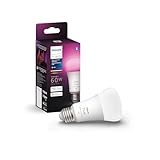
The full-color tier. These bulbs cover the entire spectrum – millions of colors plus the full tunable white range from the Ambiance line. Red, blue, purple, green, whatever. They also cover 1000K-20000K on the white spectrum, which is wider than the White Ambiance range.
This is what most people have in mind when they buy Hue. Music sync, scene-matching, party mode, Gradient strips – all of it requires the Color tier. If you have a Hue Go, Hue Play bar, or any Hue entertainment accessory, it uses this tier.
A19 option: Philips Hue White and Color Ambiance A19 2-Pack (Amazon).
Hue Essential (Newer Budget Sub-Line)
Philips also sells a newer “Hue Essential” line that offers White and Color Ambiance capability at a lower price point. The Essential bulbs have a slightly narrower color range (2200K-6500K vs the standard line’s wider spectrum) but still do full RGB color. Worth knowing if you want color at a lower entry cost.
How to Tell Which Type You Have
The quickest method: look at the bulb itself. The tier name is printed on the base of the bulb – “White,” “White Ambiance,” or “White and Color Ambiance.” They are physically near-identical otherwise.
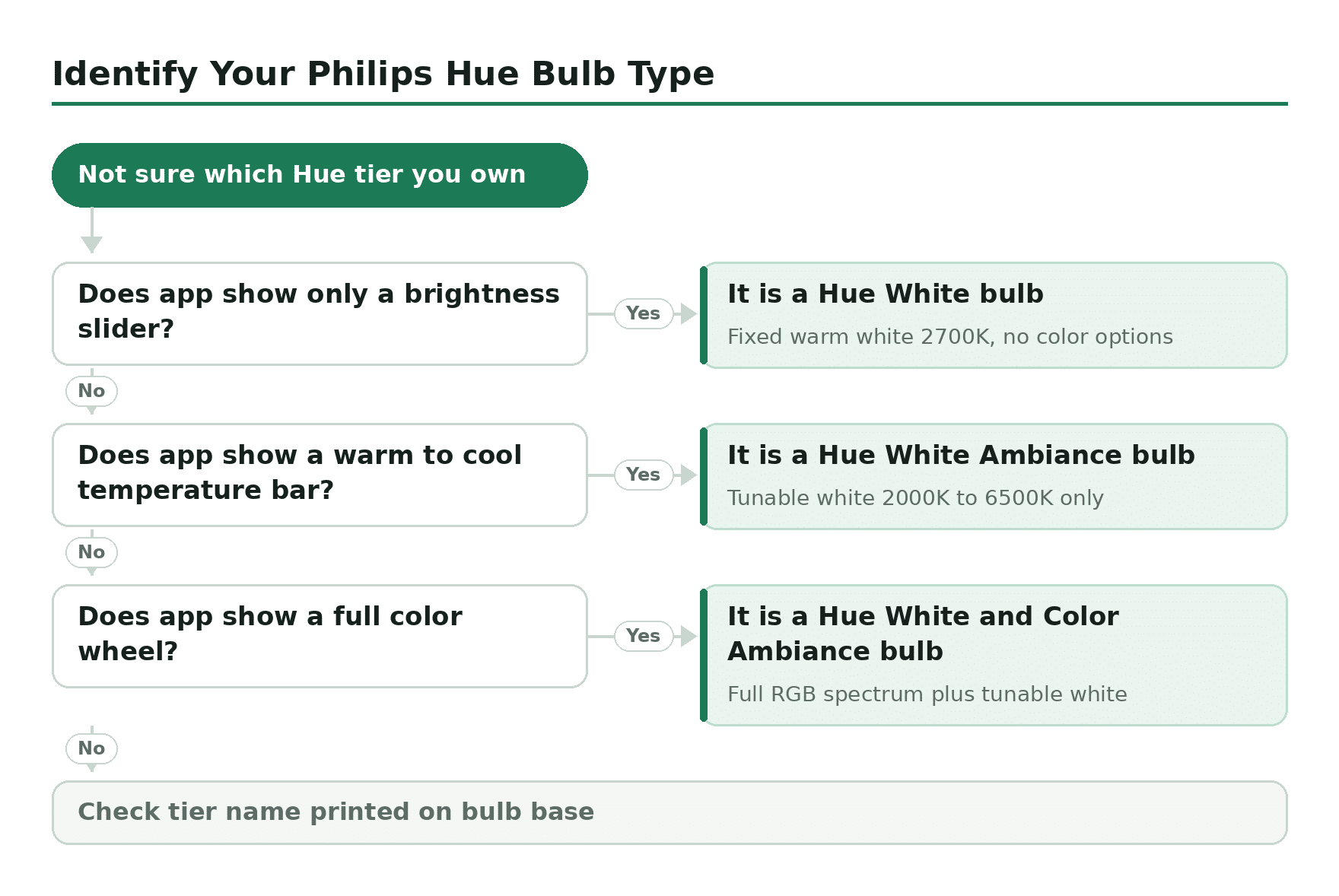
In the Hue app, tap any light and look at what options appear. If you only see a brightness slider, it is a Hue White. If you see a temperature bar (warm to cool), it is White Ambiance. If you see a full color wheel, it is Color Ambiance.
You can also check the box or the product listing where you bought it – “White,” “White Ambiance,” and “White and Color Ambiance” are clearly stated in the product name on Amazon and the Philips site.
Is Color Worth the Price Premium?
Honestly, for most rooms, no. The jump from White Ambiance to Color Ambiance usually adds $10-15 per bulb. If you are lighting a bedroom, home office, or kitchen, the tunable white range of White Ambiance covers the practical use cases – warm evenings, bright mornings, focused work light. Color is mostly a feature you use in the first week and then rarely touch again.
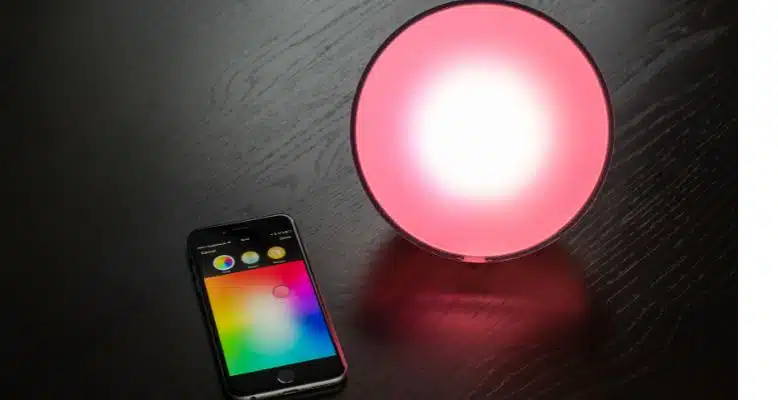
The cases where color is genuinely worth it: a home theater or entertainment room where you use Hue’s Sync app, a gaming setup, or rooms where you regularly host people and actually use the scene and color features. The Hue Go, for example, is a portable accent lamp that makes real use of the color range – the whole point of that product is ambient color for different settings.
If you are fitting out an entire home, a reasonable strategy is Color Ambiance in living room and entertainment areas, White Ambiance everywhere else.
Best Uses for Each Tier
Hue White – Rental properties, closets, laundry rooms, utility spaces where smart scheduling or voice control matters but color never would. Good for keeping costs down on a large install.
Hue White Ambiance – Bedrooms, home offices, kitchens. Any space where you want the lighting to shift with your routine – bright and cool during the day, warm and dim at night. This is the tier most people should default to.
Hue White and Color Ambiance – Living rooms, entertainment setups, gaming rooms, home theaters. Also the right call for any Hue entertainment accessories. If you want to use the Sync app with your TV, you need Color.
Does the Hue Bridge Affect Color Capability?
No. The Bridge has no effect on what colors a bulb can produce – that is determined entirely by the bulb hardware. A Color Ambiance bulb works over Bluetooth without a Bridge; a White bulb will not produce color no matter what equipment you connect it to.
What the Bridge does unlock is the full feature set: remote access when you are away from home, automations, support for more than 10 bulbs, and compatibility with integrations like Apple HomeKit, Alexa routines, and Google Home. If you are doing a full home install or want Apple HomeKit integration, you want the Bridge. For a couple of bulbs in a single room, Bluetooth alone is workable.
For more on getting bulbs connected, see the guide on Philips Hue pairing mode options.
Can Philips Hue White bulbs change color?
No. Hue White bulbs produce a single fixed warm white tone (2700K). They support dimming via the app but cannot shift color temperature or produce any colors. If you want color control, you need either White Ambiance (tunable whites only) or White and Color Ambiance (full color spectrum).
What is the difference between Hue White Ambiance and Hue Color?
White Ambiance bulbs shift across the white spectrum only – from warm candlelight (2000K) to cool daylight (6500K). They do not produce colors like red, blue, or green. White and Color Ambiance bulbs do everything White Ambiance does, plus full RGB color control covering millions of colors.
Do I need the Hue Bridge to change colors?
No. Color capability is determined by the bulb hardware, not the Bridge. A White and Color Ambiance bulb will produce full color over Bluetooth without a Bridge. The Bridge adds remote access, automations, support for more than 10 bulbs, and smart home integrations – but it does not change what colors a bulb is capable of producing.
How long do Philips Hue color bulbs last?
Philips Hue color bulbs are rated for 25,000 hours – roughly 25 years at three hours per day of use. Actual lifespan varies based on usage intensity and how often you run them at full brightness. You can read more about how long smart bulbs last here.