

This post contains affiliate links. If you buy through them, DumbSwitches may earn a commission at no extra cost to you. See our full disclosure.
Smart bulbs are rated at 15,000-25,000 hours – at 3 hours a day, that’s 14-23 years on paper. Real-world lifespan runs shorter, and not because the LED chip burns out. It’s the driver circuit, the heat trapped by the radio, and a testing standard that lets manufacturers print a bigger number on the box than they measured in the lab. Here’s what the rating means, what kills a smart bulb early, and how long each major brand realistically holds up. If you’re shopping for a new bulb rather than troubleshooting an old one, our best smart bulbs guide compares the current picks by protocol and hub needs.
The “6X Rule” Behind Every Rated-Hours Number
Every rated-hours figure on a smart bulb box – 15,000, 25,000, whatever – is an extrapolation, not a measurement. Manufacturers test LED packages under LM-80 conditions for a few thousand hours, then use a DOE-recognized standard called TM-21 to project forward. The rule: a maker can extrapolate a lifetime claim to up to 6 times the hours tested, provided the sample size and test conditions meet the standard’s requirements. Test for 10,000 hours, claim up to 60,000. Test for a few thousand, and a 25,000-hour claim on the box is well within the rules.
That’s not a loophole some brands exploit and others don’t – it’s the mechanism behind the whole industry’s rated-hours system, per a DOE-funded RTI International analysis of LM-80 data (RTI International, “Lumen and Chromaticity Maintenance Behavior of LED Packages Based on LM-80 Data,” DOE SSL Program, March 2020, p.4). It’s a legitimate statistical method, not fraud. But it means the number on the box is a projection built on a fraction of the actual hours, not a bulb someone ran continuously for three years in a lab.
What DOE Lab Testing Found (and What It Doesn’t Cover)
One important caveat before the numbers: the Department of Energy has never run a lab study on Wi-Fi or Zigbee smart bulbs specifically. Its CALiPER testing program evaluates ordinary, non-networked LED lamps – the same screw-in bulbs sold at any hardware store. But those lamps use the same LED packages and driver electronics that go inside today’s smart bulbs, so the failure modes are a legitimate cautionary parallel, even if the tested products themselves weren’t connected.
With that framing in place, here’s what a 2014 DOE-funded CALiPER study of 15 ordinary LED A-lamps found: 12 of the 15 carried 25,000-hour ratings. Two of them failed the industry L70 lumen-maintenance threshold (the point where output drops to 70% of initial brightness) in roughly 4,000 and 6,000 hours – a small fraction of their rated life. A third lamp, sold as ENERGY STAR qualified, was putting out only 69% of its original brightness at the 6,000-hour mark, well under the 91.8% ENERGY STAR requires at that checkpoint. Seven of the 15 lamps missed that checkpoint entirely (CALiPER Retail Lamps Study 3.2, PNNL for DOE SSL Program, Dec 2014, p.12).

Color drifts too, not just brightness. A separate DOE-funded CALiPER study of 45 LED lighting products found 15 of them shifted color more than the ENERGY STAR tolerance within the first 6,000 hours of operation – again, ordinary LED products from 2008-2010, not smart bulbs, and an old-enough test that today’s LED chemistry has moved on considerably (PNNL-22759, “Color Maintenance of LEDs in Laboratory and Field Applications,” DOE SSL Program, 2013, p.11). None of this is evidence that Hue or LIFX bulbs specifically drift or fail early. It’s evidence that the underlying LED hardware category – the packages and drivers every smart bulb brand buys from the same handful of suppliers – has a documented history of missing its own rated numbers by a wide margin. Rated hours are a claim, not a guarantee, for any LED product, smart or dumb.
The Rated Lifespan vs. What Happens at Home
The rated-hours figure on the box assumes stable temperature, correct voltage, and no enclosed fixture trapping heat. Real homes are none of those things.
Heat is the main killer. LEDs degrade faster when they run hot, and smart bulbs run hotter than dumb LEDs because the wireless radio and driver circuit generate extra heat inside the same glass envelope. Enclosed or semi-enclosed fixtures make this worse by trapping that heat with nowhere to go.
What dies first is usually the driver circuit or internal capacitors, not the LED chip itself. The chip might still technically glow, but the smart functions – dimming, color, connectivity – stop working reliably years before the LED chips give out. The radio and the light are rated together on the box, but they age at different speeds.
The Standby Draw Nobody Rates: Networking Power
Here’s a stat that’s genuinely about smart bulbs, not a proxy from ordinary LED testing. DOE testing of 31 domestic smart lamps found networking-only standby draw (the power a bulb pulls just to stay connected to Wi-Fi or a hub, with the light off) ranging from 0.2 to 2.4 watts, averaging 0.4 watts. Wi-Fi-connected lamps tended to draw more standby power than hub-based Zigbee or Z-Wave lamps, which the report attributes to the wireless architecture rather than anything specific to one brand (CSA Group, “Standby Power Specifications for Lighting Systems,” citing DOE 2016 test data, Dec 2017, p.12-13).
That draw is small in dollars (roughly $0.50-$3/year per bulb depending on your rate), but it’s a running current the driver circuit never gets a break from. A dumb LED bulb draws zero watts when it’s off. A smart bulb’s radio is awake the entire time it’s plugged in, which is part of why the electronics inside age differently than the LED chip does.
How Long Do Philips Hue Bulbs Last?
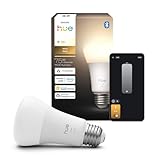
Current Philips Hue White and White & Color Ambiance A19 bulbs are rated at 25,000 hours. At 3 hours daily, that’s 22+ years of rated life. At a more realistic 8 hours daily (home office, kitchen, living room), you’re looking at about 8-9 years on paper – call it 5-7 in the real world.
Hue has held the 25,000-hour rating since its second-generation bulbs in 2015. The current generation adds Bluetooth alongside Zigbee, so you can use them without the Bridge, though you lose automations and remote access without it. Standard warranty is 2 years; bulbs qualified under ENERGY STAR get bumped to 3. Lifespan rating hasn’t changed. The build quality has, gradually, for the better.
| Model | Rated Hours | Years at 3hr/day | Warranty |
|---|---|---|---|
| Hue White A19 | 25,000 | 22+ | 2 yr (3 yr ENERGY STAR) |
| Hue White & Color Ambiance A19 | 25,000 | 22+ | 2 yr (3 yr ENERGY STAR) |
If you’re just getting started with Hue, the Hue White A19 is the straightforward option – warm white, dimmable, solid build. If you want full color control, the Hue White & Color Ambiance A19 runs the same rated lifespan and handles the full 16 million color range.
How Long Do LIFX Bulbs Last?
LIFX bulbs are rated at 25,000 hours, same as Hue, with a 2-year warranty. LIFX was acquired by Feit Electric in August 2022. Products still ship under the LIFX brand with the same app and platform, so nothing changes for existing users – but it’s no longer an independent company.
LIFX’s advantage has always been the no-hub approach. Every bulb connects directly to your Wi-Fi, which removes one failure point (the hub) but adds another (your router and Wi-Fi stability). LIFX announced Thread and Matter support at CES 2026, with a rollout planned for later in the year – as of this writing it’s still pending, not yet live across the lineup.
The newer LIFX Everyday A19 targets the value end of the market – 800 lumens, 90+ CRI, full color, Matter compatible, about $10 per bulb. The LIFX Color A19 (1100 lumen version) is the brighter option if you’re replacing a higher-wattage fixture. Both carry the 25,000-hour rating.
LIFX also gets credit for works-without-HomeKit compatibility, which is useful if you run a mixed ecosystem. See our LIFX and HomeKit guide if that’s relevant to your setup.
Smart Bulb Lifespan by Brand (Current Data)
Here’s where most of the major brands land for their A19 bulbs. The rated hours are pulled from manufacturer specs.
| Brand | Rated Hours | Years at 3hr/day | Warranty |
|---|---|---|---|
| Philips Hue | 25,000 | 22 | 2-3 years |
| LIFX | 25,000 | 22 | 2 years |
| Nanoleaf | 25,000 | 22 | 2 years |
| Sengled | 25,000 | 22 | 3 years |
| TP-Link Kasa | 25,000 | 22 | 2 years |
| Wyze | 20,000 | 18 | 1 year |
| Ring | 25,000 | 22 | 3 years |
| IKEA TRADFRI | 25,000 | 22 | 2 years |
| Yeelight | 25,000 | 22 | 1 year |
| Average | 24,500 | 22 | 2 years |
The warranty gap is the more honest signal. Sengled and Ring offer 3 years; Wyze and Yeelight offer 1. Remember that every one of these rated-hours figures is a TM-21 extrapolation from a much shorter test, not a bulb that ran for 20+ years in a lab. The warranty length tells you more about how confident each manufacturer is in their real-world failure rate than the rated-hours number does.
How to Get the Most Life Out of a Smart Bulb
Most early failures come from heat, voltage spikes, and enclosed fixtures. These are all preventable. The steps below won’t guarantee you’ll hit 25,000 hours, but they’ll keep you well clear of the “this died after two years” camp.
Don’t enclose smart bulbs
Enclosed fixtures trap heat and are the single biggest cause of early smart bulb failure. Check the bulb’s packaging for an enclosed fixture rating – most standard smart bulbs are not rated for enclosed fixtures. If yours says ‘not for use in enclosed fixtures,’ use an open fixture or switch to a model specifically rated for it.
Use a surge protector on your lighting circuit
Voltage spikes kill driver circuits fast. A decent surge protector on a lamp or smart outlet adds years of life for a few dollars. Older homes with less stable wiring benefit from this the most.
Avoid dimmers unless the bulb is rated for them
Running a smart bulb on a traditional dimmer switch creates voltage irregularities that degrade the driver circuit. If you want dimming, use the bulb’s own app-based dimming and leave the wall switch at full on.
Don’t cycle power rapidly
Smart bulbs have a small startup current draw each time they power on. Repeatedly cutting and restoring power – whether from an app, a voice assistant, or a physical switch – adds micro-stress to the driver. It’s minor, but it adds up if you’re toggling a bulb 30 times a day.
Keep firmware updated
Smart bulb manufacturers occasionally push firmware fixes that improve thermal management and power draw. Keeping your bulbs updated is free and occasionally prevents a failure. With Hue, updates happen automatically through the Bridge. With LIFX, they push over Wi-Fi if you have the app installed.
Are Smart Bulbs Worth the Price Given Lifespan?
If you’re trying to justify a $15-20 Philips Hue bulb purely on lifespan versus a $3 dumb LED, the math doesn’t work. Dumb LEDs are also rated at 25,000 hours, and they’re subject to the same TM-21 extrapolation rules. You’re not paying for longevity.
What you’re paying for is the functionality – schedules, scenes, voice control, away-mode randomization, and the ability to run a single light at 1% brightness at 2am without getting out of bed. If those things don’t matter to you, a $3 bulb does the job.
If you’re running more than a few smart bulbs together, also consider whether you need them all in the same fixture. See using multiple smart bulbs in one fixture for what to watch out for there.
FAQ
Do smart bulbs burn out?
Yes, all LEDs degrade over time – the light output drops gradually rather than failing suddenly like incandescent bulbs. Smart bulbs can also fail at the driver or radio circuit before the LED chip gives out, which is why you might lose smart features while the bulb still technically lights up.
Is the rated-hours number on the box a real test result?
Not directly. Manufacturers test LED packages for a few thousand hours under a standard called LM-80, then use a DOE-recognized extrapolation method called TM-21 to project a lifetime claim up to 6 times the hours tested. A 25,000-hour rating can legitimately come from a much shorter test – it’s a standard industry practice, not a specific brand cutting corners.
How long do Philips Hue bulbs last?
Philips Hue White and White & Color Ambiance A19 bulbs are rated at 25,000 hours, with a 2-year warranty (3 years on ENERGY STAR-qualified models). At 3 hours daily use that’s over 22 years on paper; real-world lifespan in open fixtures is typically shorter.
How long do LIFX bulbs last?
LIFX bulbs are rated at 25,000 hours with a 2-year warranty. LIFX was acquired by Feit Electric in August 2022 but continues to sell under the LIFX brand with the same app and platform.
Do smart bulbs last longer than incandescent bulbs?
Yes – significantly. Incandescent bulbs last around 1,000 hours. Smart LED bulbs are rated at 15,000-25,000 hours, or roughly 15-25x longer. They also use 75-80% less energy for the same light output.
Can you use smart bulbs in enclosed fixtures?
Most smart bulbs are not rated for enclosed fixtures. Enclosed fixtures trap heat and shorten lifespan considerably – often cutting it in half or more. Check the packaging. If the bulb isn’t rated for enclosed use, don’t use it in one.
Does a smart bulb draw power when it’s turned off?
Yes. DOE testing of 31 domestic smart lamps found networking-only standby draw of 0.2 to 2.4 watts, averaging 0.4 watts, just to keep the bulb connected to Wi-Fi or a hub. A dumb LED bulb draws zero watts when off.