

This post contains affiliate links. If you buy through them, DumbSwitches may earn a commission at no extra cost to you. See our full disclosure.
Blink cameras don’t do continuous 24/7 recording. That’s not a settings issue, a subscription tier, or something you can hack around – it’s a fundamental design choice. Blink records motion-triggered clips. That’s what these cameras are built for.
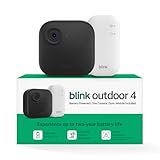
If you want to stand in front of the Blink app and watch a live feed manually, you can do that (for up to 5 minutes at a stretch). But a rolling recording that captures everything whether or not you’re watching? Blink doesn’t do it.
Here’s what it actually does – and what to buy if you genuinely need 24/7 footage.
What Blink Actually Records
When your Blink Outdoor 4 is armed and detects motion, it records a clip – typically 5 to 60 seconds depending on your settings. That clip gets saved to cloud storage (requires a subscription) or to a USB drive plugged into a Sync Module 2 (free, local).
Between motion events, nothing is being recorded. The camera is watching, but not writing anything to storage.
You can also trigger a recording manually via Live View in the app. That gives you a live stream for up to 5 minutes per session, but again, it’s not being saved unless you actively record it.
How to Tell If Your Blink Camera Is Recording
The LED on a Blink camera tells you what’s happening at a glance. Solid blue means it’s actively recording a clip. No light means it’s in standby, armed but idle.
In the app, a red dot on the camera icon confirms an active recording. You can also set up motion alert notifications so you get a push alert every time the camera fires – which is the closest thing to continuous awareness without actual continuous recording.
Local Storage: Clips, Not 24/7
Blink added local storage support via the Sync Module 2 and a USB drive (up to 256GB). A lot of people see “local storage” and assume that means continuous recording. It doesn’t.
What local storage actually does: copies of your motion-triggered clips get backed up to the USB drive. If you have a cloud subscription, clips sync to USB every 24 hours as a backup. Without a subscription, clips record directly to local storage when motion fires – but they’re still motion clips, not continuous footage.
The Blink Mini 2K+ supports this local clip storage too. Same deal – motion triggers recording, clips land on USB. Not 24/7.
How to Set Up Local Storage on Blink Sync Module 2
Plug a USB drive (up to 256GB) into the Sync Module 2
Any standard USB drive works. Blink sells their own, but any USB 2.0 or higher drive up to 256GB is supported.
Open the Blink app and go to Sync Module settings
Tap the Sync Module icon in your home screen, then select Device Settings.
Confirm local storage is detected
The app will show the USB drive as connected and display available storage. If it doesn’t appear, unplug and reinsert the drive.
Choose your storage preference
You can set clips to save to local only (no subscription needed) or to both cloud and local. Cloud-plus-local sync happens every 24 hours.
Test with a motion event
Arm your system and walk in front of the camera. Check the USB drive afterward – the clip should appear in the Blink folder on the drive.
What Blink Subscription Plans Actually Add
As of October 2025, Blink raised their subscription prices. Basic is now $3.99/month (or $39.99/year) per camera. Plus is $11.99/month (or $119.99/year) for up to 10 cameras.
What you get: 60 days of cloud clip storage, custom notification snooze, and a “Moments” feature that stitches multiple motion clips together. Plus adds an extended warranty and covers unlimited devices.
What you don’t get: continuous recording. The subscription changes how long your clips are stored and on what platform. It doesn’t change the fundamental recording model. More detail on what Blink’s subscription covers here.
If You Actually Need 24/7 Recording
Some situations just require continuous footage – rental properties, businesses, anything where a missed motion trigger is unacceptable. Blink isn’t the right tool for those. Here’s what is.
Wyze Cam v4 – Best Budget Option
The Wyze Cam v4 costs around $36 and supports true 24/7 continuous recording to a microSD card (no subscription required for local recording). It’s 2.5K resolution, indoor/outdoor rated, and has color night vision. For the price, nothing comes close.
The catch: it’s wired. You need a power outlet nearby. But if you’re doing 24/7 recording, you’re not running on batteries anyway – those two things are physically incompatible.
Reolink – Best Wired/PoE Option
If you want more serious coverage – multiple cameras, hard drive storage, no dependency on a cloud service – Reolink’s PoE camera systems are the standard recommendation. They write directly to an NVR with a hard drive and run 24/7 continuously without any subscription. More expensive upfront, but you own the whole system.
Kasa Smart Indoor Camera (KC400) – Best Indoor Option
The Kasa KC400 is a solid 2K indoor camera that supports continuous recording to a local microSD card. It’s a good fit if you want something that looks clean, integrates with Alexa and Google Home, and doesn’t require a subscription for local recording.
The Short Version
Blink is a motion-clip camera system. It’s well-made, battery-friendly, and reasonably priced – but it’s not designed to record everything. If your use case depends on not missing anything, you need a different camera.
If Blink’s motion detection coverage is enough for what you need, the local storage setup with a Sync Module 2 and USB drive is a solid, subscription-free option. See also: full guide to Blink local storage and how Blink cameras work.