
This post contains affiliate links. If you buy through them, DumbSwitches may earn a commission at no extra cost to you. See our full disclosure.
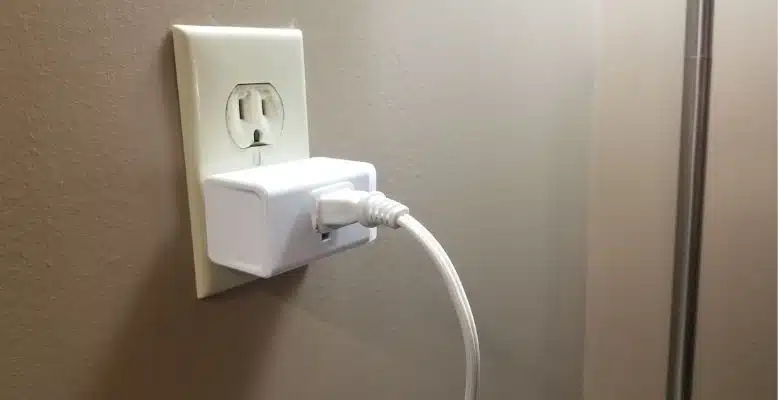
The best uses for a Kasa smart plug are appliance scheduling, energy monitoring, voice control via Alexa/Google/Siri, and away-mode lighting that makes an empty house look occupied. Those four uses cover 90% of what most people actually want from a smart plug – and the KP125M handles all of them without needing a separate hub.
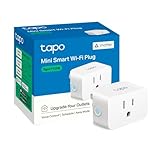
The KP125M is the current flagship – it is Matter-certified, has energy monitoring built in, and works natively with Apple Home, Alexa, Google Home, and SmartThings. If you are buying new, start here. If you have an older KP115 or HS100, the use cases below still apply. See how it stacks up against Eve Energy, Meross, and the rest of the field in our best smart plugs guide.
How to Get a Kasa Plug Running
The short version: plug it in, download the Kasa app, connect to your Wi-Fi. The KP125M also supports Matter, which means you can set it up directly in the Apple Home app, the Alexa app, or Google Home by scanning the code on the plug – no Kasa account required for that route.
Full setup walkthrough is here if you hit any snags. The Kasa app is where most of the configuration lives – schedules, timers, energy data, away mode.
Best Uses for a Kasa Smart Plug
1. Appliance Scheduling
This is what most people use smart plugs for, and it is the most immediately practical. Set your coffee maker to start at 6:15am every weekday. Set a lamp to turn on at 5pm and off at 11pm. Set the space heater to run for 45 minutes before you get home.
Schedules are set in the Kasa app per-device. You can do one-time, daily, or day-of-week recurring. You can also set a countdown timer – useful for things like dehumidifiers or fans that you only want running for a fixed window, not on a clock schedule.
Open the Kasa app and tap the plug you want to schedule
Tap the Schedule icon (clock) on the device card
Tap Add Schedule, set your on/off times, choose repeat days
Save – the schedule runs automatically from that point on
2. Energy Monitoring
This is where the KP125M (and its predecessor the KP115) earns its keep. The plug tracks real-time wattage and logs daily, weekly, and monthly usage history. You can enter your electricity rate in the app to get an actual dollar figure for what each device costs to run.
Practically, this is most useful on always-on appliances: desktop computers, older fridges in a garage, window AC units, dehumidifiers, space heaters. Devices where you suspect they are drawing more than they should, but you have never actually measured it. A week of data on a space heater has a way of ending that argument quickly.
The KP125M added time-of-use billing support, so if your utility charges different rates at peak vs. off-peak hours, the cost estimates actually reflect that.
3. Voice Control (Alexa, Google, Siri, SmartThings)
Every current Kasa plug works with Amazon Alexa and Google Assistant natively through the Kasa skill. The KP125M adds Matter support, which means it also works with Apple Home (Siri) and Samsung SmartThings out of the box – no workarounds, no HomeKit bridge.
HomeKit compatibility was the missing piece on older Kasa plugs. Matter fixes that. If you are an Apple household, the KP125M is the plug to get.
Once linked, you can use the plug in routines. “Alexa, good night” can shut off everything plugged into Kasa devices in one command. Google Home routines work the same way. Apple Automations in the Home app can trigger on time, location (when you leave home), or other device states.
4. Away Mode / Vacation Lighting
Away mode does one simple thing: it randomly turns a plugged-in device on and off during a time window you set. The randomness is the point – a light that turns on at exactly 7pm every night does not fool anyone. One that flickers on at 7:12, off at 9:43, back on at 10:08 is more convincing.
You set a start/end window (e.g., sunset to 11pm), pick which days, and the plug handles the randomization. It also supports sunrise/sunset as start/end times, which tracks automatically based on your location – useful if you set it up before a trip and do not want to update it mid-vacation.
Open the Kasa app, select your plug
Tap the Away icon on the device screen
Set your start and end times (or use Sunset/Sunrise)
Choose which days to repeat, then tap Start
FAQ
Can a Kasa smart plug be used outside?
Some models yes, some no. Indoor plugs like the KP125M are not rated for outdoor use. For outdoor use, get the Kasa EP40 – it is a dual-outlet outdoor plug with weatherproofing and the same scheduling/app features as the indoor lineup.
Which Kasa plugs support energy monitoring?
Energy monitoring is available on the KP125M (Matter, current flagship), KP115 (Wi-Fi only, no Matter), and the older HS110. The basic KP115 and KP125M are the two worth buying new. The HS100 and HS110 are older generation – still work, but no longer the recommended picks.
Do Kasa plugs work without the Kasa app?
The KP125M can be set up entirely through Apple Home, Alexa, or Google Home using Matter – no Kasa app or account needed for basic on/off and scheduling. For energy monitoring data and away mode, you still need the Kasa app.
Related Guides
- How to set up a Kasa smart plug
- Connecting Kasa to Alexa
- Does Kasa work with HomeKit?
- Kasa app guide
Still Using Kasa? Here’s the Upgrade.
Kasa smart plugs still work, but TP-Link has been winding the brand down in favor of Tapo. The KP125M is no longer sold new through most major retailers, and older models like the EP25 are fully discontinued.
The direct replacement is the Tapo P125M – same compact design, same energy monitoring and scheduling, but with Matter certification added. That means it connects directly to Apple Home, Google Home, or SmartThings without needing a cloud account. If you’re already on the Kasa app, the Tapo app is nearly identical.