
This post contains affiliate links. If you buy through them, DumbSwitches may earn a commission at no extra cost to you. See our full disclosure.
The Kasa KP125M is the smart plug most people should buy right now. It has Matter certification so it works with HomeKit, Alexa, Google Home, and SmartThings without any cloud-account gymnastics. It also has energy monitoring. It fits on one side of a duplex outlet without blocking the other. That covers almost every reason someone buys a smart plug. See how it compares to Eve Energy, Meross, and the rest of the field in our best smart plugs roundup.
A note on model versions: The original version of this post reviewed the EP25, an older Kasa mini with energy monitoring but no Matter support. That model is still available but there’s no good reason to buy it in 2026 when the KP125M costs about the same and does considerably more. This review covers the KP125M.
What You’re Actually Getting
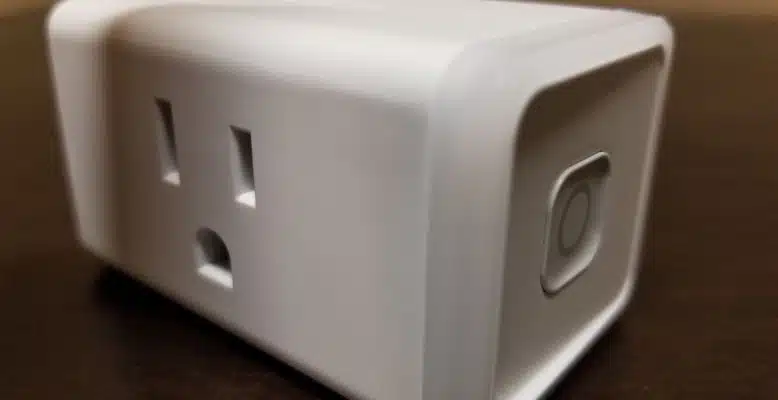
The KP125M is a single-outlet smart plug that Kasa launched in late 2022 as its first Matter-certified product. It measures 2.62 x 1.57 x 1.5 inches – compact enough that two of them sit side-by-side in a standard duplex outlet without touching. Physical LED indicator on the front, manual override button if you need it, 15A rated at 120V.
Matter certification means it works natively in Apple Home, Google Home, Amazon Alexa, and SmartThings. You don’t need a Kasa account to control it. Scan the QR code on the device, add it to your ecosystem of choice, done. This is the big upgrade from older Kasa mini plugs, which required the Kasa cloud and didn’t talk to HomeKit at all without a workaround.
The energy monitoring is real and genuinely useful. In the Kasa app, you get real-time wattage, daily/weekly/monthly usage totals, and estimated cost if you enter your per-kWh rate. That last part is more practical than it sounds – plug in a space heater or an old refrigerator and you’ll know exactly what it’s costing you within a week. The Kasa app is well-built and this is one of the better energy monitoring implementations at this price point.
The One Real Limitation
Energy monitoring does not pass through Matter. If you add this plug to HomeKit, you can turn it on and off and that’s it – no wattage data, no usage history, none of that. Same story in Google Home and Alexa. The Matter standard doesn’t currently support energy monitoring, and there’s no confirmed timeline for when it will.
In practice this means you need the Kasa app installed if you want the energy data. That’s a minor inconvenience for most people but it’s worth knowing before you buy. If you’re a HomeKit purist who refuses to install any third-party apps, this plug gives you on/off control and scheduling but nothing else.
The other thing worth flagging: Matter setup can be slightly fiddly depending on your hub situation. HomeKit via QR code is the smoothest path. Google Home has worked fine in testing. If you’re doing this without a hub (phone-only), give yourself 10 minutes rather than 2.
How to Set Up the KP125M with HomeKit
The HomeKit path is the most common, and the most straightforward way to approach it.
Plug in the KP125M
Push it into a standard outlet. The LED will blink orange and green alternately – that means it’s in pairing mode and ready.
Open the Home app on your iPhone
Tap the + icon in the top right, then select ‘Add Accessory’. Point your camera at the QR code printed on the side of the plug.
Follow the on-screen prompts
HomeKit will identify it as a Matter accessory and ask you to assign it to a room. Do that, give it a name, confirm.
Download the Kasa app for energy monitoring
On/off control works entirely through HomeKit. If you want energy data, download the Kasa Smart app and add the plug there too. The two systems run in parallel without conflict.
Set a schedule or automation
In HomeKit: Automations tab. In the Kasa app: Schedules section. Either works. The Kasa app also has Away Mode, which randomizes on/off timing to make the house look occupied.
KP125M vs KP115 – Which One to Get
Kasa still sells the KP115 (also on Amazon), an older model with energy monitoring but no Matter support. It works fine if you’re fully on Kasa’s own ecosystem and have no interest in HomeKit or Google Home. But it’s Wi-Fi only, requires a Kasa account, and won’t work without their cloud.
The KP125M is the better buy for essentially everyone. Matter means local control (it keeps working if Kasa’s servers go down), broader compatibility, and a longer useful lifespan as the smart home standard continues to consolidate around Matter. The price difference is minimal. Get the KP125M.
Verdict
The KP125M does what most people need from a smart plug: on/off control from any ecosystem, scheduling, energy monitoring, and a footprint small enough to not waste the second outlet. The energy-monitoring-doesn’t-work-through-Matter limitation is annoying but not a dealbreaker – you just need the app installed. That’s a one-time 2 minutes of inconvenience in exchange for actual kilowatt-hour data.
If you want to go deeper – multiple outlets, energy monitoring across a whole power strip – Kasa’s Smart Power Strip (also on Amazon) is the logical next step. But for a single-device setup, the KP125M is the right call and not a close decision.
Does the Kasa KP125M work with HomeKit?
Yes. The KP125M is Matter-certified, so it adds directly to Apple Home via QR code scan – no Kasa account required for basic control. The limitation is that energy monitoring data doesn’t appear in HomeKit; for that you need the Kasa app.
Does the KP125M have energy monitoring?
Yes, and it’s one of the better implementations at this price. Real-time wattage, daily/weekly/monthly usage totals, and estimated cost tracking are all available in the Kasa app. The data does not pass through to HomeKit, Google Home, or Alexa – Matter doesn’t support energy monitoring yet.
What is the difference between the KP125M and the KP115?
Both have energy monitoring. The KP125M adds Matter certification, which means it works natively in HomeKit, Google Home, and other Matter ecosystems without a Kasa account. The KP115 is Wi-Fi only, requires the Kasa cloud, and doesn’t support HomeKit. For new purchases, the KP125M is the better choice.
Is Kasa a good brand for smart plugs?
Yes – Kasa (by TP-Link) has a solid track record for reliable hardware, a well-designed app, and responsive customer support. Their plugs have been around long enough that the software is genuinely polished, not just functional. The KP125M in particular is one of the most frequently recommended smart plugs in the Matter era.
Note: the Kasa + HomeKit compatibility guide has more detail on the full Kasa lineup and which models support which platforms.
Still Using Kasa? Here’s the Upgrade.
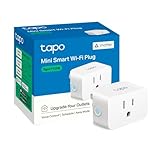
Kasa smart plugs still work, but TP-Link has been winding the brand down in favor of Tapo. The KP125M is no longer sold new through most major retailers, and older models like the EP25 are fully discontinued.
The direct replacement is the Tapo P125M – same compact design, same energy monitoring and scheduling, but with Matter certification added. That means it connects directly to Apple Home, Google Home, or SmartThings without needing a cloud account. If you’re already on the Kasa app, the Tapo app is nearly identical.