
This post contains affiliate links. If you buy through them, DumbSwitches may earn a commission at no extra cost to you. See our full disclosure.
Ring doesn’t have a simple “transfer to new owner” button – but the process isn’t complicated once you know the actual steps. The Ring Doorbell 2 was discontinued years ago, so if you’re dealing with one, it’s likely a resale or a device left behind in a house you just moved into. Either way, the ownership transfer process is the same across all Ring models.
There are now two ways to do this: Ring’s built-in Transfer Ownership feature (the clean modern method), or the old-school remove-and-reset method (still works, handy if the original owner is unreachable). Both are covered below.
Quick Answer
- Ring added a direct Transfer Ownership feature to the app – the previous owner can push the device to a new account without a factory reset.
- The old method still works: previous owner removes the device from their account, new owner factory resets (orange button, 20 seconds) and sets it up fresh.
- If the original owner can’t be reached: contact Ring support with proof of purchase.
- Removing the device does NOT automatically erase video history – that stays in the original account unless they explicitly delete it.
Method 1: Transfer Ownership Through the Ring App (Recommended)
Ring added a proper Transfer Ownership workflow to the app. This is the cleanest approach – the previous owner sends the device to the new owner’s account, and no factory reset is required.
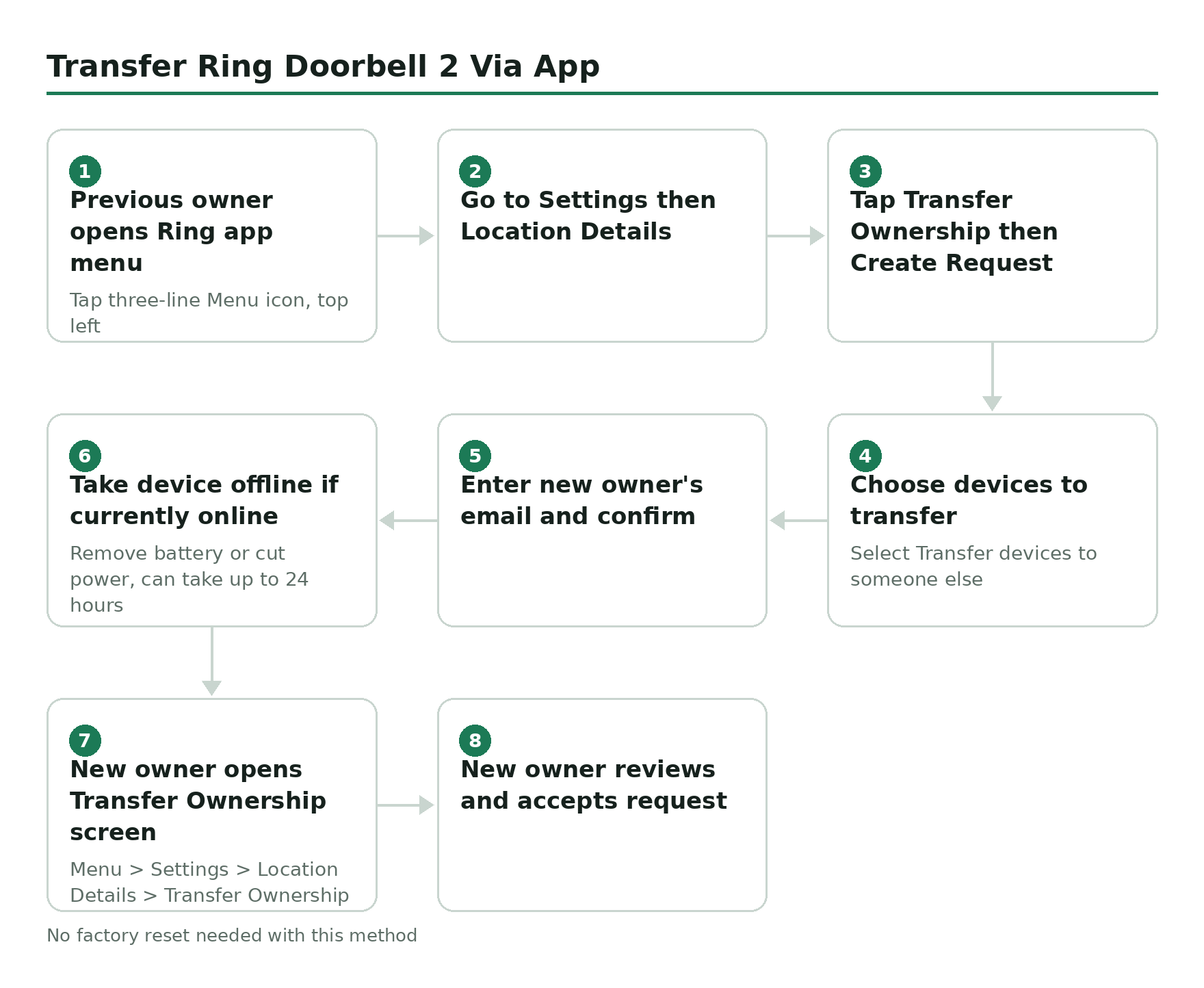
The previous owner does this in their Ring app:
Open the Ring app and tap the Menu icon (three horizontal lines, top left).
Go to Settings, then find Location Details.
Tap Transfer Ownership, then tap Create Request.
Select Transfer devices to someone else and choose the device(s) to transfer.
Enter the new owner’s email address and confirm.
The new owner gets an email and in-app notification. They open Ring app > Menu > Settings > Location Details > Transfer Ownership, review the request, and accept.
One thing to know: if the device is currently online, Ring requires it to be taken offline (remove the battery or cut power) before the new owner can complete setup. Ring says this can take up to 24 hours, though in practice it’s usually much faster.
Method 2: Remove Device + Factory Reset (Works Without Cooperation Too)
This is the original method and still works fine. If the previous owner is available, they remove the device from their account. If they’re not – say you bought the doorbell off Craigslist and the seller has gone silent – skip to the factory reset step and then contact Ring support.
Previous Owner: Remove the Device
Open the Ring app and tap Menu > Devices.
Select the Doorbell 2 from your device list.
Tap Device Settings > General Settings > Remove Device.
Choose Keep Events (your video history stays in your account) or Delete Events (wipes the recordings). Then confirm removal.
New Owner: Factory Reset and Set Up
Remove the Doorbell 2 from its mount and take out the battery.
Hold the orange button on the back of the device for 20 seconds, then release. The front light will flash, indicating a successful reset.
Reinstall the battery and mount the doorbell.
Open the Ring app (create an account if you don’t have one), tap Set Up a Device, and follow the prompts to add the doorbell to your account.
What Happens to Video History?
Here’s something people get wrong: removing a Ring device from an account does NOT automatically delete the previous owner’s video footage. When the previous owner removes the device, they choose whether to Keep Events or Delete Events.
If they choose Keep Events, their recordings stay in their Ring account for however long their Ring Protect plan stores them – you, as the new owner, won’t see any of it. Once you add the device to your account, you start with a clean slate.
The new owner never gets access to the previous owner’s footage. That’s the design. Ring keeps account-level video history tied to the account, not the device hardware.
If the Original Owner Can’t Be Reached
Factory-resetting the Doorbell 2 (orange button, 20 seconds) breaks the Wi-Fi connection and clears local settings, but it does NOT release the device from the previous owner’s account. Ring’s system tracks device ownership server-side.
So if you’ve factory reset and the Ring app still won’t let you add the device – it’s likely still registered to the previous owner. Contact Ring support at support.ring.com and provide proof of purchase (receipt, invoice, or for a house you just bought, a copy of the closing documents). Ring can flag the device for re-registration on their end.
Before You Transfer: Things to Sort Out First
- Remove shared users: If the previous owner added any shared users to the doorbell, they should remove them before transferring. Shared users lose access automatically once the device moves to a new account, but it’s cleaner to tidy up beforehand.
- Cancel or transfer the Ring Protect subscription: Transferring the device does NOT cancel any active Ring subscription. The previous owner needs to cancel their subscription separately if they no longer need it. The new owner will need their own subscription if they want cloud recording.
- Download any video clips you want to keep: Once you remove the device from your account, you can choose to retain history in your account, but you’ll no longer get new recordings from that doorbell. Download anything important before you start.
The Ring Doorbell 2 Is Discontinued – Worth Upgrading?
The Ring Doorbell 2 was discontinued several years ago. If you’re inheriting or buying a used one, it’ll still work – Ring hasn’t bricked old devices – but you’re running hardware that’s two or three generations behind.
The current equivalent is the Ring Battery Doorbell Plus, which adds head-to-toe HD+ video (you can see packages on the ground, not just faces), color night vision, and a much faster Quick Release battery. If you’re already going through the hassle of transferring ownership on an old device, it’s worth considering whether a fresh device makes more sense.