
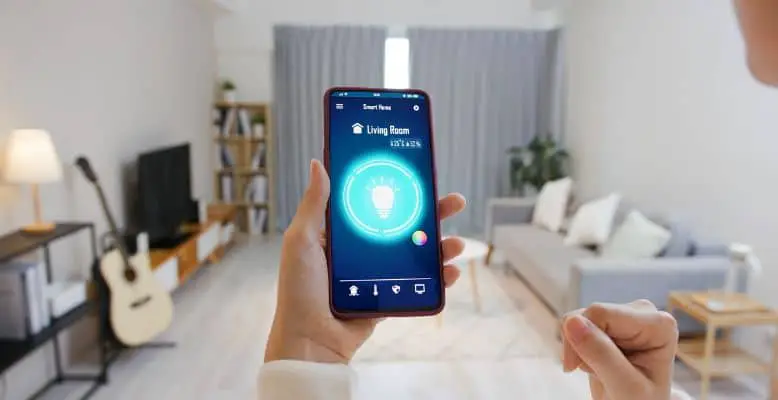
Yes – LIFX works with Apple HomeKit natively, with no hub or bridge required. Screw in the bulb, open the Home app, scan the QR code on the bulb, and you’re done. The brand was acquired by Feit Electric in 2022 and is still actively supported, with new products announced at CES 2026.
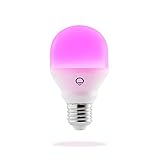
How LIFX HomeKit Works
LIFX bulbs connect directly to your 2.4GHz Wi-Fi network – no hub, no bridge, no extra hardware on your shelf. That’s always been the main pitch over Philips Hue, which required a bridge until relatively recently.
Once connected, the bulb shows up in the Apple Home app like any other HomeKit accessory. You can control it with the Home app, Siri, or any HomeKit automation. Remote access (controlling lights when you’re away from home) requires an Apple TV, HomePod, or iPad set up as a home hub – same requirement as any HomeKit device.
Current LIFX bulbs also support Matter over Thread, which gives you a low-latency mesh option if you have a Thread border router. If you don’t know what that means, ignore it and use the standard Wi-Fi setup.
Setting Up LIFX in Apple Home
Screw in the bulb and turn it on
Power the bulb from a standard light switch. It will flash or pulse when it’s in pairing mode.
Open the Apple Home app
Tap the + icon in the top right corner and select “Add Accessory.”
Scan the HomeKit QR code
Point your camera at the QR code printed on the bulb or inside the box. It has the HomeKit logo on it. The Home app will detect it automatically.
No QR code? Use the 8-digit code
If the QR code is unreadable or missing, tap “More options” in the Home app. Your bulb should appear as a nearby device. Alternatively, type in the 8-digit HomeKit code printed on the bulb or in the manual.
Name it and assign a room
Give the bulb a name (e.g. “Desk Lamp”) and assign it to a room. That’s it – it’s now controllable from the Home app and Siri.
What You Can Control Through Apple Home
Once LIFX is in HomeKit, you get the full range of controls:
- On/off and brightness from the Home app or Siri
- Full color control on color-capable models (the A19 Color supports millions of colors)
- Color temperature adjustment from warm white to daylight
- Scenes – set a specific color and brightness combo that triggers with one tap or a voice command
- Automations – turn on at sunset, dim at 10pm, turn off when everyone leaves home
- Siri Shortcuts for one-command control
The LIFX app gives you additional options – more granular scenes, schedules, and the Polychrome effects – but none of that is required once the bulb is in HomeKit.
Any Known Issues?
A few things worth knowing before you buy:
- App updates have slowed down since Feit Electric took over. The core HomeKit functionality works fine, but the LIFX app itself is less polished than it used to be.
- Some users report occasional connectivity drops that need an app restart to fix. Not universal, but it comes up in reviews.
- Remote access through the LIFX app depends on LIFX cloud servers. HomeKit remote access uses Apple’s infrastructure instead, which is generally more reliable. If you care about remote control, HomeKit is the better path anyway.
- LIFX only works on 2.4GHz Wi-Fi. If your router doesn’t broadcast a separate 2.4GHz network (some mesh systems combine the bands), you may hit setup issues.
Which LIFX Bulb to Get
For most people, the LIFX A19 Color (2-pack, available on Amazon) is the right call. It’s 1100 lumens, Matter compatible, works with HomeKit out of the box, and fits any standard E26 socket. The 2-pack pricing makes it one of the better-value hub-free HomeKit options on the market.
The Everyday line (800 lumens) is cheaper but dimmer – fine for smaller rooms or lamps, not great as a main ceiling fixture.