
This post contains affiliate links. If you buy through them, DumbSwitches may earn a commission at no extra cost to you. See our full disclosure.
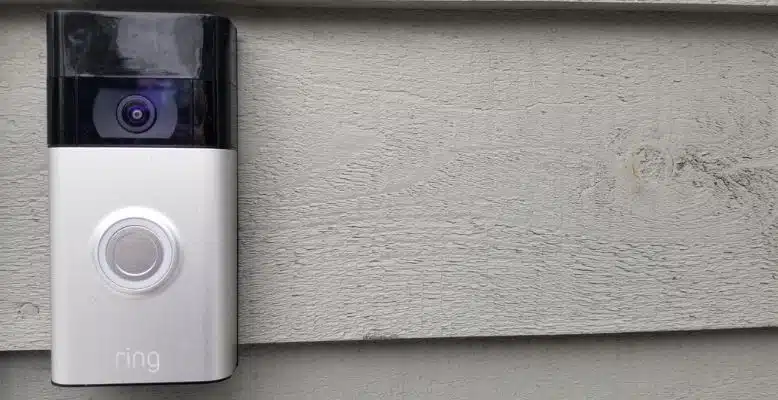
The Ring Video Doorbell 2 was discontinued in April 2020. Ring still supports it, and it still works fine – but you can’t buy it new anymore, and the current lineup has moved on. If you already own one and want to know what you’ve got, this review covers everything. If you’re shopping for a doorbell camera right now, skip to the bottom section where I tell you what to buy instead.
Quick Specs
- Video: 1080p HD, 160-degree field of view
- WiFi: 2.4GHz only (no 5GHz – that came with Ring 3)
- Night vision: Black and white IR
- Motion zones: Up to 3 customizable zones
- Audio: Two-way
- Power: Quick-release removable battery pack, or hardwired (trickle charges only)
- Battery life: 6-12 months (Ring’s claim); real-world is closer to 5-6 months at average activity
- Voice assistants: Amazon Alexa (native); Google Home (via Ring integration added 2023); Apple HomeKit (not supported)
- Weather rating: IP65
- Operating temp: -5°F to 120°F
- Dimensions: 4.98 x 2.43 x 1.06 inches
Setup
Installation is genuinely straightforward. The Ring app walks you through it step by step, and if you have existing doorbell wiring, the whole thing takes under 15 minutes. No existing wiring? You can run it on battery and skip the wiring entirely – works fine that way.
The box includes the doorbell unit, a screwdriver, screws and anchors, and a quick-start guide. You’ll need a drill if you’re mounting to masonry or brick. Everything else is handled through the app on your phone.
For full step-by-step instructions, see the Ring Doorbell 2 installation guide.

Video Quality and Night Vision
1080p at 160 degrees is solid. You’ll get a clear view of whoever’s at the door and enough field of view to catch people approaching from the side. License plates and faces are readable in good lighting conditions.
Night vision is black and white IR – functional, not impressive. You can see who’s there, and you can see enough to know if something’s happening in your yard. What you won’t get is color night vision (that came much later in the product line) or any detail beyond maybe 15-20 feet in the dark.
One limitation worth knowing: the Ring 2 has no pre-roll. When motion triggers a recording, it starts at the moment of detection. The Ring 3 added pre-roll (a few seconds before the trigger), which is more useful than it sounds when someone grabs a package and walks off before the camera catches them. See the Ring Doorbell 2 night vision guide for detailed coverage of low-light performance.
Motion Detection
You get up to 3 customizable motion zones. Set them to cover your porch, driveway, or walkway and ignore the street – useful for cutting down on false alerts from passing cars.
Motion sensitivity is adjustable. Out of the box it’s set fairly aggressive, which means you’ll get a lot of notifications. Dial it back a bit in the app and you’ll settle into a cadence that’s actually useful rather than maddening.
The Ring 2 doesn’t do person detection or package detection – it just detects motion. If you want the doorbell to tell you “a person is at the door” versus “a car drove by,” you’d need a newer model. For more detail on configuration, see the motion detection setup guide.
Battery Life
Ring claims 6-12 months per charge. Real-world testing from multiple sources lands closer to 5-6 months at average use (Ring defines that as 3-5 events per day). High-traffic locations – busy streets, lots of deliveries – will chew through it faster.
The Ring 2 introduced the quick-release battery pack, which is a meaningful upgrade over Ring 1. With the original Ring doorbell, you had to remove the entire unit from the wall to charge it. The Ring 2 lets you pop the battery out from the bottom with a tab, charge it indoors on a Micro USB cable, and snap it back in. The doorbell stays on the wall.
If you run it hardwired, note that it trickle-charges rather than mains-powers the device. It won’t drain the battery under normal conditions, but a very busy doorbell in hardwired mode can outpace the charge rate and still show gradual battery drop. Full details on the Ring Doorbell 2 battery page.
Alexa Integration
Works natively with Amazon Alexa. You can get doorbell announcements through Echo devices, view the live feed on Echo Show screens, and use Alexa routines to trigger other devices when someone rings. It’s one of the stronger points of the Ring ecosystem – everything connects without any fiddling.
Google Home integration was added in 2023 via Ring’s official Google Home integration – so it does work, just not as natively as Alexa. Apple HomeKit is not supported, and there’s no workaround that doesn’t involve third-party bridge software. If you’re deep in the Apple ecosystem, this isn’t the doorbell for you. For the full breakdown, see does Ring Doorbell 2 work with Alexa.

Ring Subscription Plans (Updated January 2026)
Ring renamed its subscription plans in January 2026. The old “Ring Protect Basic” and “Ring Protect Plus” names are gone. Here’s what they’re called now and what they cost:
- Ring Solo – $4.99/month or $49.99/year. Covers one device. Includes video recording, review, and sharing for 180 days.
- Ring Multi – $9.99/month or $100/year. Covers all devices at one location. Adds extended warranties on Ring devices.
- Ring AI Pro – $19.99/month or $200/year. Adds intelligent features, alarm monitoring, and advanced video search. Overkill for most doorbell-only setups.
Without a subscription, you can still answer the door in real time (live view and two-way audio work), but you can’t review recorded footage afterward. Whether that’s fine depends on why you bought the doorbell. If you just want to know when someone’s there, free works. If you want to review who came by while you were out, you need Ring Solo at minimum.
For more on what’s required: does Ring Doorbell 2 require a subscription.
Who Should Keep It vs. Who Should Upgrade
Keep the Ring 2 if: You already own it and it’s working. The hardware still functions, Ring still supports it with app updates, and 1080p with motion zones is more than adequate for most front doors. There’s no reason to replace a functioning device.
Buy used if: You find one for under $40-50 and just need a basic battery-powered video doorbell with no frills. At that price it makes sense. At anything close to original retail, it doesn’t – you’d be paying legacy prices for a discontinued product when better hardware costs the same.
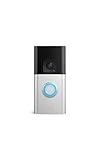
Buy new instead if: You’re starting fresh or replacing a failed unit, get the Ring Battery Doorbell Plus. It runs 1536p HD+ video with a wider head-to-toe field of view, includes package detection, has a removable battery (same quick-release design), and supports both 2.4GHz and 5GHz WiFi. It’s the direct successor in everything except name, and it’s currently available at $179.99.
Troubleshooting
Most Ring 2 problems come down to WiFi signal strength or battery charge. The 2.4GHz-only connection means range is decent but susceptible to interference from other 2.4GHz devices in the home. If yours keeps dropping offline, check signal strength in the Ring app (Device Health) before assuming the unit is failing.
For the full list of known issues and fixes: Ring Doorbell 2 troubleshooting guide.
FAQ
Is the Ring Doorbell 2 still supported?
Yes. Ring still supports the Doorbell 2 with app updates and subscription access as of 2026. The hardware is discontinued (no longer manufactured or sold new), but existing units continue to function on the platform.
Does Ring Doorbell 2 work with 5GHz WiFi?
No. The Ring Video Doorbell 2 is 2.4GHz only. If your router is dual-band, make sure you connect it to the 2.4GHz network during setup. 5GHz support came with Ring Doorbell 3 and later models.
What replaced the Ring Doorbell 2?
Ring discontinued the Doorbell 2 in 2020. The current equivalent is the Ring Battery Doorbell Plus, which offers 1536p video, head-to-toe field of view, package detection, and a removable battery at roughly the same price point the Ring 2 originally sold for.
Can you use Ring Doorbell 2 without a subscription?
Yes, with limits. Live view and two-way audio work without a plan. To review recorded video history, you need Ring Solo ($4.99/month) at minimum. Ring renamed its plans in January 2026 – the old Ring Protect Basic is now Ring Solo.
Related Guides
- How to install Ring Doorbell 2
- Ring Doorbell 2 battery: life, charging, and replacement
- Ring Doorbell 2 night vision performance
- Ring Doorbell 2 troubleshooting
- Does Ring Doorbell 2 require a subscription?
- Does Ring Doorbell 2 work with Alexa?
- Best Ring Doorbell in 2026 – Battery Plus vs Video 4 vs Wired
- The best Ring Doorbell alternatives in 2026