
This post contains affiliate links. If you buy through them, DumbSwitches may earn a commission at no extra cost to you. See our full disclosure.
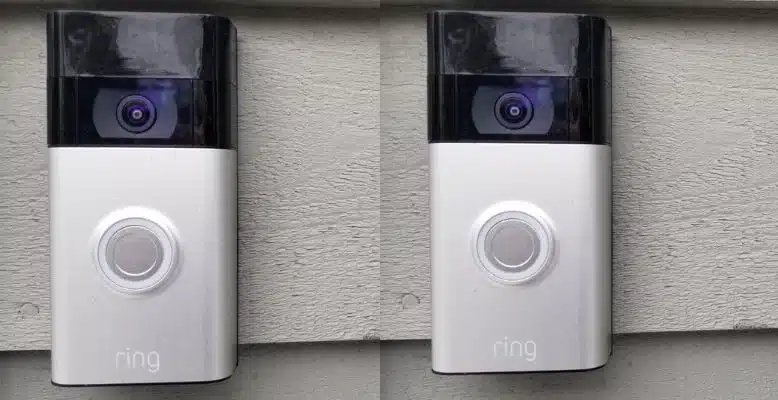
Yes, you can have two Ring doorbells (or more) in one house. The Ring app supports multiple devices on a single account – you manage everything from one place, get notifications labeled by doorbell name, and each unit keeps its own independent settings. The main things to sort out before you buy the second one: chimes, power, and your subscription plan.

How Multiple Ring Doorbells Work on One Account
Ring lets you add up to 10 devices at a single location by default. Each doorbell shows up as its own entry in the app – tap on it to see live view, review clips, or adjust settings. Notifications include the device name you assign during setup, so you know immediately whether someone rang the front door or the side gate.
A few things to know upfront:
- Each doorbell needs its own Wi-Fi connection and power source
- Motion zones, sensitivity, and ringtones are set independently per device
- The Doorbell Sharing feature (added ~2021) lets you share access with household members – everyone gets notifications from all doorbells without needing separate accounts
- Always use one Ring account for your whole household. Splitting devices across two accounts creates permission headaches and limits shared access
Chime Options: One Chime or Two?
This is the part most people don’t think about until after they’ve installed both doorbells. The chime problem is simple: if both doorbells trigger the same internal chime, you hear a ring but have no idea which door it came from.
You have two good solutions:
- Assign different ringtones per device. In the Ring app, go to each doorbell’s settings and pick a distinct ringtone for your Ring Chime Pro. Front door gets the classic ding-dong, back door gets a different tone. Problem solved without buying extra hardware.
- Use two separate chimes. One Ring Chime Pro per doorbell, placed in different areas of the house. You’ll hear whichever one is closest to where you are. Works well in larger homes.
If you have existing mechanical or digital chimes wired into the house, the same logic applies – different zones, different chimes, no confusion.
Transformer and Power Considerations (Hardwired Setups)
Battery-powered doorbells sidestep this entirely – skip this section if you’re going battery. For hardwired installs, pay attention.
Ring recommends a minimum of 16V AC at 30VA per hardwired doorbell. If you want to run two doorbells off one transformer, that transformer needs to supply at least 30VA total combined – ideally more headroom than that. A transformer rated at 16V / 30VA running two doorbells simultaneously is right at its limit, which causes inconsistent performance and charging issues.
The cleaner solution for two hardwired doorbells is a separate transformer per doorbell, or a single transformer rated at 40VA or higher. See our guide on running two Ring doorbells on one transformer for the full wiring walkthrough.
Subscription Plan: Why Ring Multi Makes Sense with Two Devices
Ring’s current plans (as of 2026) are Ring Solo ($4.99/mo or $49.99/yr) and Ring Multi ($9.99/mo or $99/yr). Solo covers one device. Multi covers all devices at one location for a flat rate.
If you want video history and smart alerts on both doorbells – and you do, otherwise what’s the point – you need Ring Multi. Two Solo plans would cost $10/mo and only cover one device each anyway. Ring Multi at $9.99/mo for everything at your address is the obvious call.
Note: each plan covers one physical location. If you have Ring devices at a second address (rental property, vacation home), that address needs its own subscription.
How to Add a Second Ring Doorbell to Your Account
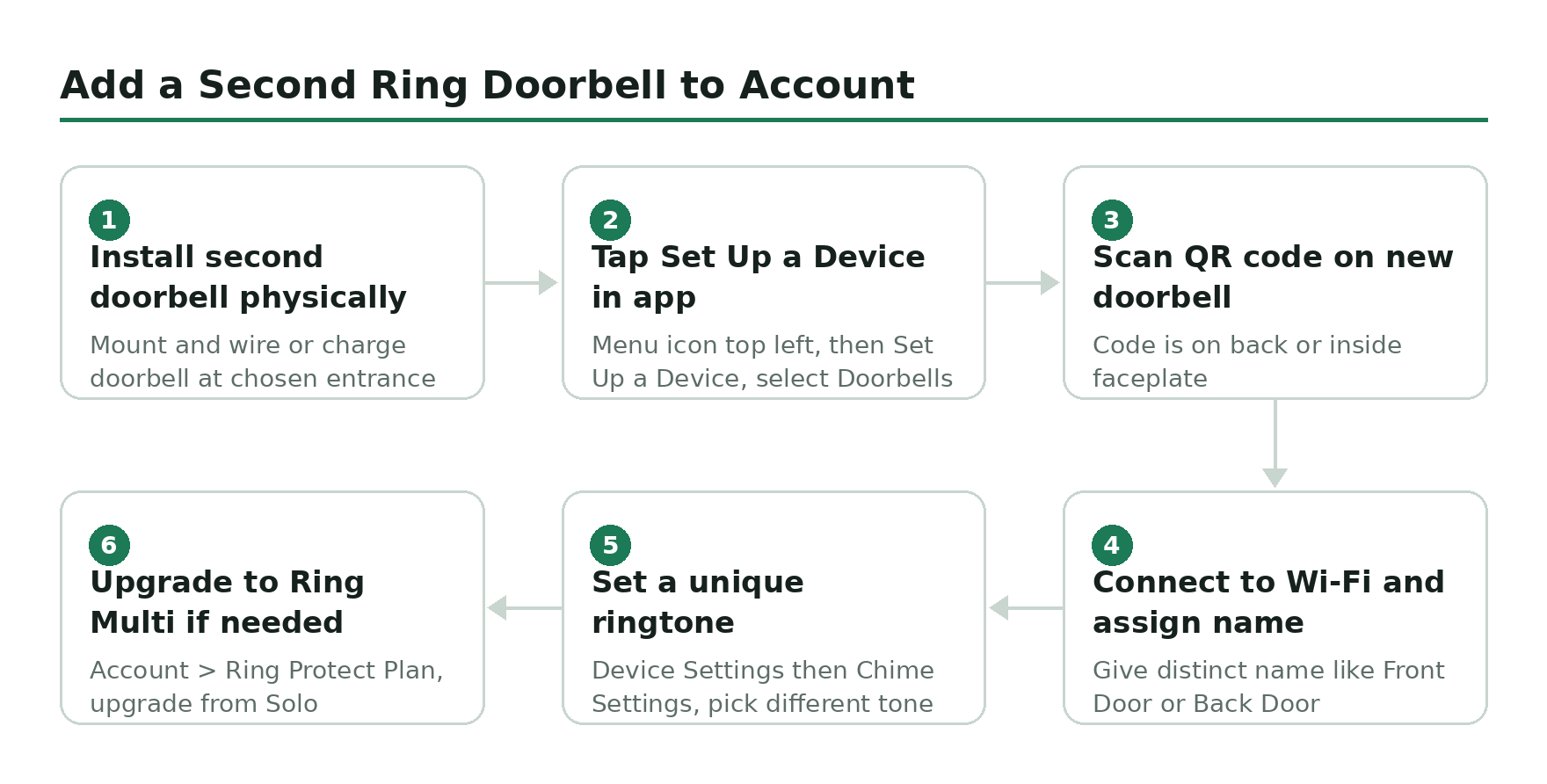
Install the second doorbell physically
Mount and wire (or charge) the new doorbell at your chosen entrance. Run the existing internal chime wire if hardwiring, or confirm the battery is charged if going wireless.
Open the Ring app and tap Set Up a Device
From the Ring app home screen, tap the menu icon (three lines, top left), then tap ‘Set Up a Device’. Select ‘Doorbells’ from the device type list.
Scan the QR code on the new doorbell
The app will ask you to scan the QR code on the back or inside the faceplate of the new doorbell. This links it directly to your account.
Connect to Wi-Fi and assign a name
Follow the in-app prompts to connect the doorbell to your Wi-Fi network. Give it a distinct name – ‘Front Door’ and ‘Back Door’ or similar. The name appears in all notifications.
Set a unique ringtone for this doorbell
Go to Device Settings for the new doorbell, then Chime Settings. Pick a ringtone that differs from your first doorbell. This is what lets you know which door was pressed without looking at your phone.
Upgrade to Ring Multi if you haven’t already
If you’re on Ring Solo, go to Account > Ring Protect Plan in the app and upgrade to Ring Multi. This ensures both doorbells have video history and smart alerts enabled.
Which Two Ring Doorbells Work Best Together?
The most practical pairing for most houses: a Ring Battery Doorbell Plus on the front door (wider field of view, head-to-toe video, color night vision) and a Ring Battery Doorbell Wired on the side or back entrance where you want coverage without spending extra. Both run on battery, so no transformer math required.
If you already have a Ring Doorbell on the front and just want to add coverage at a secondary entrance, the Battery Doorbell Wired at ~$60 is the low-drama option.
FAQ
Can I have 2 Ring doorbells at different locations on one account?
Yes. You can add Ring devices at multiple addresses to one Ring account. Each location needs its own Ring Protect subscription, though – a single Ring Multi plan only covers one address.
Can two Ring doorbells share the same internal chime?
They can, but you won’t be able to tell which doorbell was pressed. Fix this by assigning different ringtones to each doorbell in the Ring app (under Device Settings > Chime Settings), or by using separate Ring Chime Pros for each doorbell.
Do both Ring doorbells need to be on the same Wi-Fi network?
They each need a Wi-Fi connection, but it doesn’t have to be the exact same network. In practice, both will typically connect to your home Wi-Fi. If you have a mesh network with multiple bands, connect each doorbell to whichever band gives the strongest signal at that location.
Can you have two Ring doorbells on one transformer?
Yes, if the transformer is rated high enough. Ring recommends 16V AC at 30VA minimum per hardwired doorbell. For two doorbells, you need a transformer that can handle the combined load – ideally 40VA or more. See our full guide on running two Ring doorbells on one transformer for wiring details.