

This post contains affiliate links. If you buy through them, DumbSwitches may earn a commission at no extra cost to you. See our full disclosure.
The Ring Video Doorbell 2 is weather resistant – it’ll handle rain, snow, and sleet without complaint. Ring hasn’t published an official IP rating for it, but years of real-world use confirm it survives normal outdoor conditions just fine. What it won’t survive: direct submersion, a sustained blast from a pressure washer, or flooding. For the average British (or Midwestern) rainstorm, you’re fine.
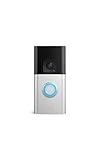
Quick note: Ring pulled the Doorbell 2 from sale around 2020. If you’re already installed, everything below still applies. If you’re shopping for a new unit, skip to the bottom – the Ring Battery Doorbell Plus is the current equivalent and a genuine upgrade.
What “Weather Resistant” Actually Means
Ring describes the Doorbell 2 as “weather resistant” but deliberately avoids publishing a specific IP rating. In practice, based on independent testing and user reports, it performs in line with a mid-range weather resistance rating – protected against dust and water jets from any direction, but not designed for prolonged submersion or extreme exposure.
Translation: normal rain, fine. Snow accumulation on the device, fine. Direct garden hose blast at close range or flood-level water, not fine. If you’re in a region that gets genuinely extreme weather, an overhang or rain cover is worth the three minutes to install.
One thing Ring is clear about: the battery door and the USB charging port cover must be properly closed and seated for any weather protection to hold. A poorly closed port cover is the most common cause of water ingress on these units.
How to Make Sure Yours Is Properly Protected
The Doorbell 2 is reasonably durable out of the box, but a few installation choices make a real difference in how long it lasts.
What About Condensation?
This one catches people off guard. If the doorbell sits in a very humid environment for extended periods – particularly if it’s cold overnight and warms up sharply in the morning – you can get fogging on the lens or minor condensation inside the unit. The device handles it, but it’s not pleasant to look at.
If you notice fogging: wipe the exterior with a dry cloth and give it a few minutes in direct (but not scorching) sun. A hairdryer on low from a foot away works too. It’s rarely a sign of damage – just physics doing its thing.
Mounting under an overhang also helps with this, since it limits the temperature swings the unit experiences.
Cold Weather and the Battery
Ring rates its doorbells to operate between -4°F and 122°F (-20°C to 50°C), with best performance around 75°F (25°C). The Doorbell 2 will keep running outside that window, but not well.
The battery is the part that actually suffers. Lithium batteries lose capacity as the temperature drops, so a charge that lasts three months in September might last three weeks in January. Below freezing, the Doorbell 2 will stop charging entirely if it’s still mounted outside – Ring built it that way to protect the battery, not because anything’s broken. If you need to charge it during a cold snap, pull the battery (see the faceplate removal guide) and charge it indoors over USB, then remount it.
None of this is a defect. It’s how lithium chemistry behaves, and every battery-powered doorbell on the market has the same limitation.
Signs of Actual Water Damage
Ring is direct about this in its own support documentation: its doorbells are water-resistant and designed to withstand normal rainfall and snow, but they are not waterproof and should not be submerged or exposed to high-pressure water. That distinction is the one to keep in mind if you’re trying to figure out whether what happened to yours is normal wear or an actual failure.
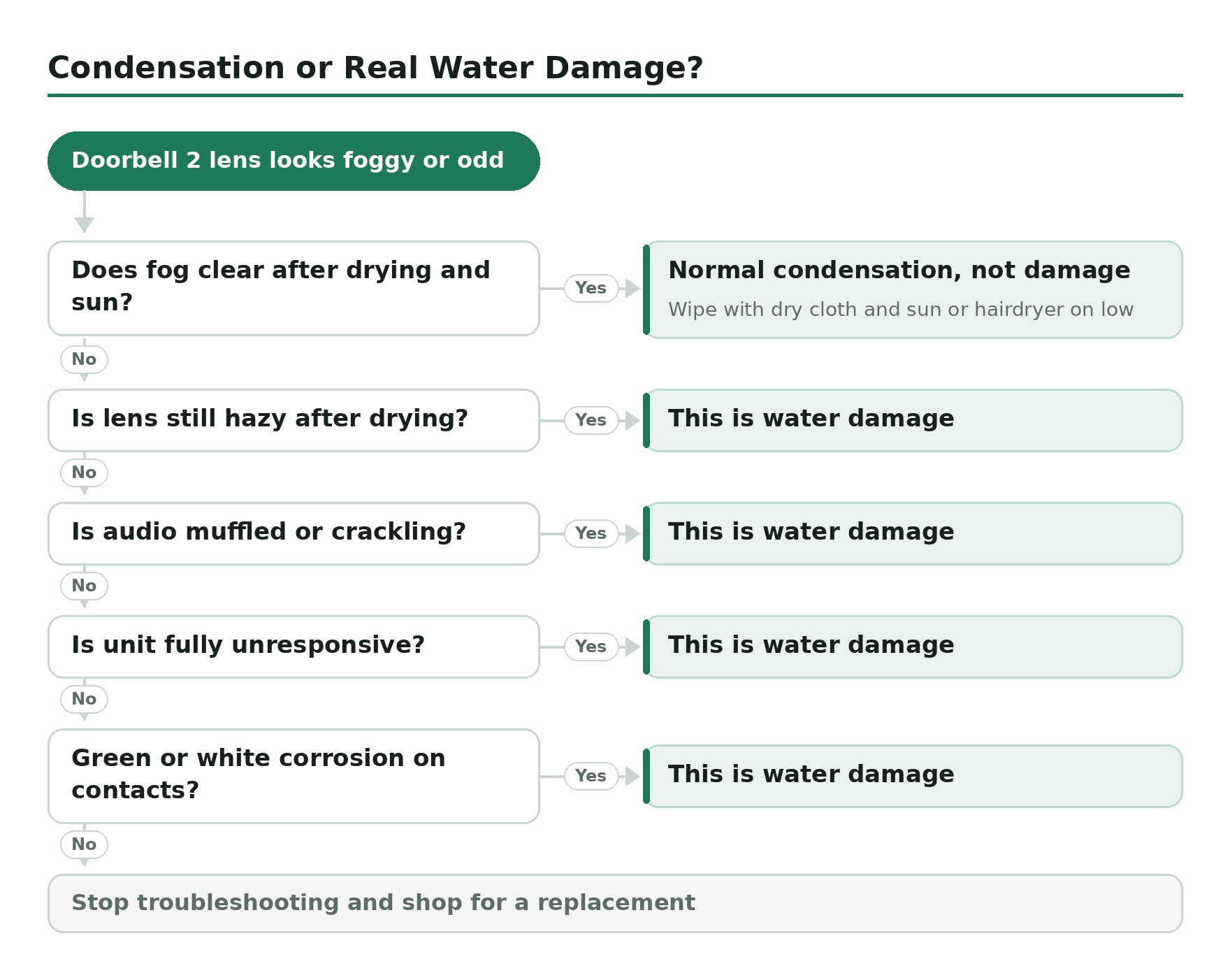
Real water damage looks like a permanently foggy or hazy lens that doesn’t clear after drying out, muffled or crackling audio, the unit going fully unresponsive, or green and white corrosion on the charging contacts when you pull the battery. Simple morning condensation, covered above, clears on its own. Corrosion and a dead unit don’t.
Ring’s warranty covers manufacturing defects, not water damage from submersion or misuse – so if a garden hose or a flood got to yours, don’t expect a free replacement. If your Doorbell 2 is showing these symptoms and it’s not coming back, that’s the point to stop troubleshooting and start shopping. Here’s what’s actually worth buying instead.
The Doorbell 2 Is Discontinued – Here’s What to Buy Instead
Ring stopped selling the Doorbell 2 around 2020. If yours is working, keep using it – the weather resistance hasn’t changed and it still connects to the Ring app fine. But if you’re replacing it or buying for a new installation, the Ring Battery Doorbell Plus is the direct successor. It’s battery-operated like the 2, shoots in 1536p HD+ with a head-to-toe field of view (you’ll actually see packages on your step), includes colour night vision, and has the same weather-resistant build. Around $150 retail.
If you’re hardwiring, the Battery Doorbell Plus supports that too – same unit, just plugs into your existing doorbell wiring to keep it charged without manual battery swaps.