

This post contains affiliate links. If you buy through them, DumbSwitches may earn a commission at no extra cost to you. See our full disclosure.
Ring sells more doorbells than any one household needs, and the lineup keeps moving. In March 2026 Ring replaced its entire battery doorbell range with 2nd-generation models – a 4K Pro at the top, a redesigned 2K Plus in the middle, and a cheaper base model underneath. The wired side got its own shuffle too. None of that changes the answer for most people, but it does mean “just get whatever’s popular on Amazon” is a worse strategy than it used to be.
Short answer: the Battery Doorbell Plus below covers what most households actually need, works without any existing wiring, and beats anything cheaper in the lineup on video quality. It’s the prior-generation Plus, not the brand-new 2K Plus Ring announced this year – more on that difference below – but it’s still a legitimately good doorbell at a lower price than what replaced it. If you have doorbell wiring and want zero battery maintenance, the Wired is a solid budget pick. If you’re running an old Ring Doorbell 2 and weighing whether to upgrade, our full review of it covers that decision specifically.
Best Overall Ring Doorbell: Battery Doorbell Plus
The Battery Doorbell Plus is the doorbell we’d point most people toward. The head-to-toe field of view catches who’s at your door AND what they’re holding – useful if you care about package theft or want to see what got left on the step. Color night vision is sharp enough to identify faces, not just shapes. The quick-release battery takes about five seconds to swap.
One thing to know upfront: saving and reviewing footage needs a Ring Protect subscription. Without one you get live view and two-way talk only – real-time, but nothing to scroll back through. More on what each tier actually unlocks further down.
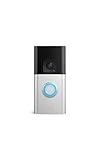
Best Mid-Range Pick: Ring Video Doorbell 4
The Video Doorbell 4 has one feature the Plus doesn’t: color pre-roll. It records a 4-second color clip before motion is officially detected, so you get the full sequence instead of just the tail end. If you’ve ever missed the moment someone actually touched your package because the camera triggered a beat too late, that’s the problem pre-roll solves.
The tradeoff is a narrower field of view than the Plus – 160 degrees instead of head-to-toe. If pre-roll specifically matters to you, the 4 is worth it, especially on sale. Otherwise the Plus has the better spec sheet for similar money.
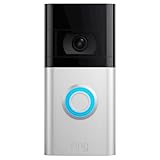
Best Budget Hardwired Option: Ring Video Doorbell Wired
The Video Doorbell Wired is Ring’s entry-level option and it’s genuinely fine for what it is. Clear 1080p video, solid motion detection, always-on power. The compact body fits narrow door trims where the bigger Ring models look out of place, and it’s Ring’s most affordable doorbell – useful if you’re outfitting more than one entry point.
The catch: it’s hardwired only. No battery option, no flexibility. You’ll need an existing doorbell transformer (8-24V AC, 40VA max). If you’re renting, remodeling, or just don’t have the wiring, skip it and go with the Plus instead.
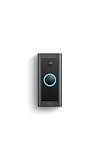
Ring’s Full 2026 Lineup, Decoded
Ring now sells six current doorbell models split across two families, on top of whatever’s still in retail channels from the generation before. Here’s how the current lineup breaks down, and where the three picks above sit relative to it.
| Model | Power | Resolution | Notable |
|---|---|---|---|
| Battery Doorbell (2nd Gen) | Battery | 2K | Ring’s current entry-level battery model |
| Battery Doorbell Plus (in this roundup) | Battery | 1536p HD+ | Prior-generation Plus, head-to-toe view, still sold new |
| Battery Doorbell 2K Plus (2nd Gen) | Battery | 2K Retinal | Replaced the Plus above in March 2026, adds 6x zoom |
| Battery Doorbell 4K Pro (2nd Gen) | Battery | 4K Retinal | Ring’s first 4K battery doorbell, 10x zoom |
| Video Doorbell Wired (in this roundup) | Wired only | 1080p | Cheapest current Ring doorbell |
| Wired Doorbell Pro | Wired only | 4K Retinal | 10x zoom, Ring’s top wired option |
The Plus and the Wired we’ve recommended above are the previous generation – still sold new, still fully supported, and priced below what replaced them. If you want the newest sensor and don’t mind paying more for it, the 2K Plus and 4K Pro are the current flagships. For most doorbell use cases (seeing who’s there, catching packages, talking to a delivery driver) the jump to 4K buys you more digital zoom, not a fundamentally different experience.
What a Ring Protect Subscription Actually Gets You
Ring renamed its subscription tiers in January 2026. They’re now called Ring Protect Solo, Multi, and Pro – Solo covers a single device, Multi covers every Ring device at one address, and Pro layers on professional monitoring and AI-powered search through past footage. Functionally, the tiers work the same way they always have: pay for one, and the price scales with how many Ring devices you own.
Without any plan, your doorbell still works as a doorbell. You get live view, two-way talk, and a real-time motion alert the moment someone steps up. What you don’t get is anything to look back at – no saved clips, no scrubbing through the last hour to see who left the package on your step three minutes before you noticed. If that’s a dealbreaker, budget for Solo at minimum. If you’re building out a Ring camera system alongside the doorbell, Multi is the one that stops the monthly cost from multiplying per device.
Still Running a Ring Doorbell 2? Here’s the Honest Read
Ring discontinued the original Doorbell 2 back in 2020, and it’s not coming back in any form. That doesn’t mean yours stopped working – it hasn’t, and it won’t tomorrow either. It just means Ring’s engineering attention has moved on. New features land on the Battery Doorbell Plus, the 4K Pro, and everything released after them; the Doorbell 2 gets security patches and not much else.
Whether that’s a reason to upgrade depends on what’s actually bothering you about the old one. We’ve got a full Ring Doorbell 2 review and a dedicated breakdown of Doorbell 2 vs 3 if you’re trying to figure out whether the jump is worth it, plus troubleshooting guides if the thing you actually want is just to fix what you’ve got instead of replacing it.
How to Choose the Right Ring Doorbell
| Pick | Best for | Skip if |
|---|---|---|
| Battery Doorbell Plus | No existing wiring, want the best value in the lineup | You specifically want color pre-roll or 4K |
| Video Doorbell 4 | Color pre-roll matters to you, or it’s on sale near Plus pricing | You want the widest possible field of view |
| Video Doorbell Wired | Existing doorbell wiring, zero interest in battery swaps | You don’t have a doorbell transformer already |
The Battery Doorbell Plus is the right call for most people. It works without wiring, beats the Wired and the 4 on video quality, and the battery swap is fast enough that it’s not a real inconvenience. Go Wired if you want zero battery maintenance and already have the wiring for it. Go with the Video Doorbell 4 only if pre-roll matters to you specifically, or it’s meaningfully cheaper than the Plus at the moment you’re buying.
One honest limitation across the entire Ring lineup, new and old: none of it works with Apple HomeKit, not even through Matter. Amazon owns Ring and has shown zero interest in supporting a competing ecosystem – our HomeKit compatible devices list has the full picture of what does and doesn’t play with Apple Home. Not sold on Ring at all? See our roundup of the best Ring doorbell alternatives.
Ring Doorbell FAQs
Do Ring doorbells require a subscription?
No, but without one you can only view the live feed – you can’t save, review, or share recordings. Ring’s subscription plans (renamed Ring Protect Solo, Multi, and Pro in January 2026) add video history, and Pro adds professional monitoring on top. You need at least the base tier to get recorded footage at all.
Do Ring doorbells work without Wi-Fi?
No. Every Ring doorbell requires a Wi-Fi connection. Live view, motion alerts, two-way talk – all of it goes through the cloud. If your Wi-Fi is unreliable or you want local storage, a Eufy doorbell is worth a look instead.
Do Ring doorbells work with Google Home?
Ring works natively with Alexa. Google Home integration exists – you can pull up the live feed on a Nest Hub – but you won’t get the same proactive alert functionality you get with Alexa. If you’re a Google Home household, the Nest Doorbell is the better-integrated option.
Do any Ring doorbells work with Apple HomeKit?
No, none of them, old or new. Ring has never shipped HomeKit or Matter support on any camera or doorbell, and there’s no indication that’s changing. The only workaround is a third-party bridge like Homebridge, which is more project than most people want to take on for a doorbell.