

This post contains affiliate links. If you buy through them, DumbSwitches may earn a commission at no extra cost to you. See our full disclosure.
SimpliSafe and Ring Alarm are the two DIY security systems most people end up comparing. They are similarly capable, both work without a monitoring contract, and both skip Apple HomeKit entirely. The decision mostly comes down to your smart home ecosystem – and one is clearly the right choice depending on which one you’re already in.
Here is a direct comparison across the things that actually matter: hardware, monitoring structure, smart home integration, and where each one falls apart.
Quick Verdict
- Best overall: SimpliSafe – easier setup, more flexible monitoring tiers, works with no subscription at all
- Best for Alexa households: Ring Alarm – deeper Amazon integration, including voice disarming with a spoken passcode
- Better camera integration: Ring – same app, same ecosystem as Ring doorbells and cameras
- Better no-subscription experience: SimpliSafe – local siren-only mode is genuinely functional

SimpliSafe
SimpliSafe is the easier recommendation for most people. The hardware goes together quickly – the app walks you through placement, sensors peel-and-stick onto door frames, and the Base Station connects over Wi-Fi without requiring a hub to be paired first. Most setups are done in under an hour. This is the Gen 3 system, the only version SimpliSafe currently sells – see our generation compatibility guide if you own an older Original system and are wondering what carries over.
Monitoring is structured in tiers: Standard (24/7 professional monitoring, the entry-level paid plan), Core (adds live guard video verification, so a human looks at your camera feed before dispatching police, which cuts false-alarm dispatches), and Pro and Pro Plus above that, which add features like Active Guard Outdoor Protection for exterior cameras. No contracts on any of them – you can cancel monthly. You can also run SimpliSafe with no subscription at all: the local siren still works, you just lose remote monitoring, app alerts, and smart home integrations.
Smart home support: Alexa and Google Home, both limited to arming and status checks – neither can disarm the system by voice. No native Apple HomeKit. If you’re in the Apple ecosystem, that’s a real gap, and neither competitor in this comparison closes it either. For the Google side specifically, see our SimpliSafe and Google Home setup guide.
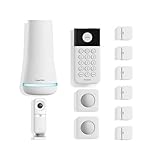
The SimpliSafe 11-piece kit on Amazon is the standard entry point. Includes the Base Station, keypad, motion sensor, and door/window sensors.
Ring Alarm
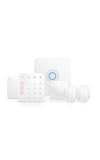
Ring is Amazon’s home security system, and the Amazon integration is the reason to buy it. If you already use Echo devices, Ring Alarm slots into your existing routines cleanly – Alexa can arm and disarm the system by voice (you speak a four-digit passcode to disarm, which is more than SimpliSafe offers through either Alexa or Google Assistant), announce alarm status, and trigger Ring Alarm as part of automations. The Ring app also handles cameras, doorbells, and the alarm system in one place, which matters if you already have a Ring doorbell.
Ring restructured its subscription plans in January 2026 into three tiers: Solo, Multi, and Pro. Solo and Multi cover camera and doorbell features. Ring Alarm’s 24/7 professional monitoring and cellular backup specifically require the Pro tier – Solo and Multi alone don’t include monitored dispatch for the alarm system. No long-term contracts on any tier.
No native Apple HomeKit support. Google Home integration exists but is limited compared to the Alexa experience. Ring Alarm Pro, the higher-end base station with a built-in eero Wi-Fi 6 router, is still part of the current lineup if you want your alarm hub doing double duty as your router. The hardware is expandable with a wide range of add-on sensors, cameras, and smart lighting through the Ring ecosystem. For the full review, see our dedicated Ring Alarm write-up.
Head-to-Head Comparison
| Category | SimpliSafe | Ring Alarm |
|---|---|---|
| Ecosystem / smart home | Alexa and Google Home, arm/status only. No HomeKit. | Deep Alexa integration including voice disarm with passcode. Limited Google Home. No HomeKit. |
| Monitoring flexibility | Four tiers (Standard, Core, Pro, Pro Plus), no contract | Three tiers (Solo, Multi, Pro), no contract, Pro required for alarm monitoring |
| No-subscription mode | Functional local siren-only mode | Siren and push/email alerts work; remote arm/disarm via app or Alexa requires a plan (physical keypad still arms/disarms) |
| DIY installation | Peel-and-stick, Wi-Fi based, roughly an hour | Peel-and-stick, hub-based, similar setup time |
| Camera ecosystem | Narrower, cameras feel separate from the alarm system | Deep – Ring doorbells, indoor/outdoor cameras, and the alarm system share one app |
| Apple HomeKit | Not supported | Not supported |
The HomeKit gap applies to both of these systems equally, and it’s not close to fixed. If Apple’s ecosystem is where you actually live, neither SimpliSafe nor Ring belongs on your shortlist – check our full list of HomeKit-compatible devices for security systems that do integrate natively.
Camera Integration
Ring wins this clearly. The Ring ecosystem spans doorbells, indoor and outdoor cameras, floodlights, and the alarm system – all managed in one app, with Ring cameras getting first-party treatment on Echo Show displays. SimpliSafe has its own cameras but the ecosystem is narrower, and camera feeds don’t show up on third-party smart displays like Nest Hub or Echo Show at all.
Installation
Both are DIY, both use peel-and-stick sensors. SimpliSafe is slightly faster to configure from scratch since the Base Station connects directly over Wi-Fi. Ring’s Z-Wave-based hub is just as easy if you’re already familiar with the Ring app, though Ring locks its base station to Ring-branded sensors only. Z-Wave itself is an open protocol, but Ring chose not to support third-party Z-Wave sensors on the Ring Alarm hub – you’re buying Ring-branded sensors regardless of the open standard underneath.
False Alarm Handling
SimpliSafe’s Core plan and above include a feature called Intruder Intervention: when a sensor trips a camera-covered zone, a live monitoring agent pulls up the camera feed and talks through its two-way audio, warning off an intruder before deciding whether to request dispatch. It’s bundled into the Core tier and up – no separate charge once you’re on that plan.
Ring has a comparable capability called Virtual Security Guard, but it’s structured differently: a standalone add-on, not something built into Solo, Multi, or Pro. When it’s active on an enrolled camera, a live agent watches for motion, talks through the camera speaker if someone’s detected, and can request emergency dispatch – functionally similar to Intruder Intervention, just sold on its own, not bundled into a monitoring tier.
Running Either System Without Paying Monthly
Both companies let you skip a subscription entirely, but what you keep is different. On SimpliSafe with no plan, the local siren still works, and that’s close to the whole story – no app alerts, no remote arm/disarm, no smart home integration. On Ring with no plan, the physical keypad still arms and disarms the system and the siren still works, but remote arm/disarm through the app or Alexa requires a Ring subscription – Ring says so directly in its own support documentation. Professional monitoring and cloud video storage are also plan-only on both systems.
Neither free tier replaces professional monitoring. Both are fine for a vacation home or a shed you just want to know got opened – neither is a serious plan for a primary residence you actually want watched while you sleep.
Choose SimpliSafe If
- You want the best standalone alarm system and don’t have strong Amazon ecosystem ties
- You want the option to run the system without any monthly fees and still have a functional local siren setup
- You want more granularity in monitoring tiers, including a video-verification step before police get dispatched
- You’re not planning to build out a large camera network under the same system
Choose Ring If
- You already use Echo devices throughout your home and want the alarm folded into existing routines
- You already have a Ring doorbell or camera and want everything – doorbell, cameras, alarm – in one app
- Voice disarming matters to you specifically – Ring supports it with a spoken passcode through Alexa, SimpliSafe doesn’t offer it through any voice assistant
- You want a base station that also replaces your router, via the Ring Alarm Pro’s built-in eero Wi-Fi 6 hardware

Which One Should You Buy
Neither is a bad choice. The hardware is similar, the monitoring network quality is comparable, and both have been on the market long enough to have stable software. The ecosystem question is the real differentiator, and you probably already know which side of it you’re on: if Echo speakers and Ring cameras are already scattered around your house, Ring Alarm is the path of least resistance. If you’re starting from a blank slate or want the most flexible no-subscription fallback, SimpliSafe is the safer default.
If ADT or Abode are also on your shortlist, our best smart home security systems roundup covers all four.