

This post contains affiliate links. If you buy through them, DumbSwitches may earn a commission at no extra cost to you. See our full disclosure.
Smart doorbells deliver real value from day one. You stop missing deliveries, you can talk to whoever’s at the door without opening it, and you have footage if anything goes wrong. The question isn’t whether to get one – it’s which one fits your setup and how much you’re willing to pay for cloud storage afterward.

Our top picks
Four doorbells made this list across different priorities – no subscription required, battery convenience, ecosystem fit, and hardwired reliability. Here’s what each one does best.

Best overall – Eufy Video Doorbell S330
The Eufy S330 wins the top spot because it refuses to nickel-and-dime you after the purchase. Dual 2K cameras – one wide, one zoomed – store everything locally via HomeBase. No subscription, no video history fees, no features locked behind a paywall. You buy it once and it works fully.
The dual-camera setup is the real differentiator. The standard wide lens covers the full scene. The second camera points downward to capture packages and faces at close range – the blind spot that single-lens doorbells consistently miss. Anyone who’s had a porch pirate walk right under the camera angle will understand why this matters.
HomeKit support via HomeBase makes it a natural fit for Apple homes. AI detection is handled on-device, so the person-vs-motion discrimination works without cloud processing. The wired installation requires an existing doorbell wiring setup, but if your home has that already, setup is straightforward. This is the doorbell you buy if you want to own the product rather than rent access to it.
Best battery doorbell – Ring Video Doorbell 4
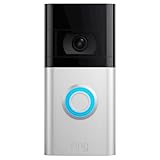
The Ring Video Doorbell 4 is the best choice for renters or anyone without existing doorbell wiring. It runs on a rechargeable battery and mounts with screws – no electrician, no fishing wires through walls. The quick-release battery pack slides out for charging without removing the entire unit.
The feature that separates the 4 from older Ring models is pre-roll video. Four seconds of color pre-roll captures what happened before the motion trigger fired. That’s often the most useful part of a clip – you see the person approaching, not just them standing at your door already. It’s a small thing that makes the footage significantly more useful.
Ring ecosystem integration is tight. If you have Ring Alarm, Ring cameras, or Ring Chime, this doorbell extends the setup cleanly. The Ring app handles everything in one place. Ring Protect plans start at $4.99/month per device for 180 days of video history – without it, you get live view and motion alerts but no way to review past footage. If you’re in the Ring ecosystem already, the plan likely makes sense. If you’re starting fresh, that ongoing cost is worth pricing in before you commit.
Best for Google homes – Nest Doorbell Battery
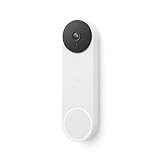
The Google Nest Doorbell Battery is the obvious choice if your home runs on Google. It connects to Google Home, shows up on Nest Hub displays, and works with Google Assistant without any bridging or workarounds. The integration depth is what you’d expect from a first-party product.
The video quality is one of the best in this category – 1.3MP HDR (roughly 960×1280) with a tall aspect ratio that captures head-to-toe in a way 16:9 doorbells miss. The tall frame is more useful than a wide frame for a doorbell specifically, because you want to see the person’s face and what’s in their hands.
Familiar face detection is free – the camera learns faces you tag and notifies you specifically (“Jana is at the door”) rather than just “motion detected.” That works without any subscription. What requires Nest Aware ($8/month) is video history beyond the last three hours of event clips. For most people, three hours of free history plus live view covers most situations. If you want 30 days of history, the plan is required. The battery lasts roughly two to three months depending on activity.
Best wired option – Arlo Video Doorbell 2K
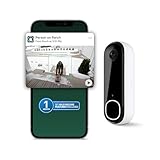
The Arlo Video Doorbell 2K is the right choice if you have doorbell wiring and want the best video quality on this list. 2K HDR with a 180-degree head-to-toe view covers the full scene without any dead angles – you see packages on the ground and faces at eye level in the same frame.
Being hardwired means you never think about charging. The doorbell is always on, always recording, always ready. For a primary entrance where you want reliable continuous coverage, wired wins over battery every time.
SmartThings support makes it compatible with Samsung smart home setups beyond the Arlo ecosystem. Arlo’s own app handles everything fine, and Alexa and Google Assistant both work with it. Without an Arlo Secure subscription, you get live view, motion alerts, and the last 30 seconds of clip stored temporarily – enough to check what triggered the notification, not enough for meaningful history. Arlo Secure starts at $2.99/month per device. For a wired doorbell specifically, the subscription cost is easier to justify because the hardware is doing more work.

Wired vs battery – the honest trade-offs
Wired doorbells have one significant advantage: they’re always powered. No charging cycles, no dead doorbell on the one day you need it, no battery degradation over time. If you have existing doorbell wiring, a wired model is almost always the better choice. The Eufy S330 and Arlo 2K are both hardwired options on this list.
Battery doorbells offer placement flexibility that wired can’t match. Rentals, older homes without doorbell wiring, gate posts, or anywhere a wire run would be complex or expensive – battery wins in those situations. The Ring 4 and Nest Doorbell Battery both handle this well. The Ring battery charges via USB and slides out without tools. The Nest charges via USB-C with the camera still mounted.
Battery life varies more than spec sheets suggest. High-traffic locations with frequent motion triggers will drain batteries faster than quiet addresses. If your front door gets five or more visitors a day – delivery drivers, neighbors, kids coming and going – expect the lower end of the advertised battery range.
Subscription comparison
Eufy is the cleanest story: buy it, use it, pay nothing more. The S330 stores video locally via HomeBase and all AI detection features work on-device. There is no subscription tier because there’s no cloud infrastructure to sell you access to. That’s a principled position that makes the purchase decision simple.
Ring loses video history without Ring Protect. Live view works. Motion alerts work. But if you want to review what happened at 2am last Tuesday, you need a plan. Ring Protect Basic is $4.99/month per device or $10/month for the whole home. If you have multiple Ring devices, the home plan makes more sense.
Nest loses extended history without Nest Aware. The free tier gives you three hours of event clip history, which handles most day-to-day needs. Nest Aware at $8/month extends that to 30 days. Familiar face detection – arguably the most useful Nest feature – stays free. That’s a better free-tier trade-off than Ring offers.
Arlo Secure is technically optional for live view, but the useful feature set shrinks significantly without it. Arlo’s free tier doesn’t include cloud history – it stores a brief clip temporarily. For a $2.99/month entry tier, the subscription cost is low, but the principle of a camera that requires a subscription to do its main job is worth naming plainly.