

This post contains affiliate links. If you buy through them, DumbSwitches may earn a commission at no extra cost to you. See our full disclosure.
Most people buy a home security system once, set it up wrong, and forget about it until the battery dies or the monitoring company jacks up the price. That is not a great strategy.
This is a straight comparison of the four DIY security systems worth considering in 2026: SimpliSafe, Ring Alarm, ADT Self Setup, and Abode. Different systems for different people – here is how to figure out which one you actually want.
Quick Picks
- Best overall: SimpliSafe – easiest setup, solid monitoring, works without a subscription
- Best for Amazon households: Ring Alarm – deep Alexa integration, reasonable pricing
- Best for Apple HomeKit: Abode – the only serious option with native HomeKit support
- Best if you want ADT monitoring without a contract: ADT Self Setup
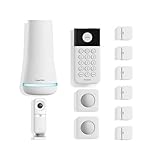
SimpliSafe
SimpliSafe is the easiest sell. The hardware works out of the box with no hub configuration, the app is genuinely good, and you can run the system without any monitoring plan at all – local siren only. That matters if you want the option to cancel later without losing functionality.
Monitoring plans start at $19.99/month for the standard plan (24/7 professional monitoring, no cameras) or $29.99/month for the Fast Protect plan that includes live guard video verification – which means a human reviews your camera feed before dispatching police, cutting false alarm fees. No contracts on any plan.
Smart home integrations: Alexa and Google Home, but no native Apple HomeKit support. If you are all-in on Apple, this is a dealbreaker. If you are not, it is a non-issue. For a closer look at how it compares to Ring Alarm specifically, see our SimpliSafe vs Ring Alarm comparison.
The SimpliSafe 11-piece starter kit on Amazon runs around $250-300 and includes the base station, keypad, motion sensor, and several door/window sensors. Solid starting point for a two-bedroom apartment or small house.
Ring Alarm
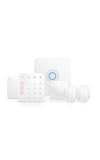
Ring is Amazon’s play, and it shows. If you already have Echo devices throughout your house, Ring Alarm slots in cleanly – Alexa routines, voice arming/disarming (with a PIN), the works. The app is the same Ring app you might already use for a doorbell camera, which simplifies things if you want a unified camera and alarm system. Read our full Ring Alarm review for the complete breakdown.
Monitoring is $10/month for the basic Ring Protect plan or $20/month for Ring Protect Pro, which adds 24/7 professional monitoring plus a built-in 3GB/month backup cellular connection (useful if someone cuts your internet during a break-in). No long-term contracts.
No Apple HomeKit support. Google Home integration exists but is limited compared to the Alexa experience. If your household is split between Apple and Amazon devices, Abode handles that better.
The Ring Alarm 8-piece kit (2nd Gen) on Amazon is typically the best entry point – base station, keypad, contact sensor, motion detector, and range extender. Affordable hardware, and Ring frequently runs it on sale.
ADT Self Setup
ADT has been doing home security since 1874 and its brand reputation is genuinely valuable – the ADT yard sign and sticker alone have deterrent value that a no-name system does not. ADT Self Setup is the company’s attempt to compete with DIY systems without requiring a technician visit or a multi-year contract.
The system is powered by Google technology (ADT acquired LifeShield and partnered with Google), which means Google Home integration is solid. Alexa works too. No HomeKit.
Professional monitoring runs $24.99/month with no contract required – you can cancel anytime. That is higher than Ring but you are getting the ADT dispatch network and response center reputation behind it. The hardware costs more upfront than Ring or SimpliSafe, but you can sometimes find deals through ADT directly.
Best for: homeowners who want the ADT name on their system and their lawn without signing a three-year contract. Not the pick if you want HomeKit or the cheapest monthly bill.
Abode

Abode is the pick for anyone serious about Apple HomeKit. It is the only major DIY security system with native HomeKit support, which means you can arm/disarm it from the Home app, include it in HomeKit automations, and check status through Siri. No hacks, no bridges.
Beyond HomeKit, Abode also supports Alexa, Google Home, Z-Wave, and Zigbee – giving you more third-party device compatibility than any other system on this list. If you have a mixed smart home ecosystem with locks, lights, and sensors from different brands, Abode handles it cleanly.
Monitoring options: no plan required (local siren only), a $6/month plan for cellular backup only, or $20/month for 24/7 professional monitoring. The $6 plan is a genuinely useful middle tier – you get cellular backup so the system works if your internet goes down, without paying for professional monitoring you may not want.
The Abode 4-piece smart security system on Amazon is the best starting point – hub, motion sensor, door sensor, and key fob. No long-term contracts on any plan.
Head-to-Head: What Actually Matters
Professional Monitoring Costs
- Ring Alarm: $10/month (basic) or $20/month (pro with cellular backup)
- SimpliSafe: $19.99/month (standard) or $29.99/month (Fast Protect with video verification)
- Abode: $6/month (cellular only) or $20/month (full monitoring)
- ADT Self Setup: $24.99/month
Contracts
All four systems offer month-to-month monitoring. No contracts. This is now the baseline expectation for DIY systems – any company still pushing multi-year contracts for self-installed hardware is not worth your time.
Smart Home Integrations
- Apple HomeKit: Abode only
- Amazon Alexa: all four systems
- Google Home: SimpliSafe, Ring, ADT Self Setup (strong); Abode (supported)
- Z-Wave / Zigbee devices: Abode only
DIY Installation
All four are self-installed. Sensors mount with 3M tape, no wiring, no drilling required for basic setups. SimpliSafe and Ring are the fastest to get running – 30 minutes from box-open to armed system is realistic. Abode takes slightly longer if you are configuring Z-Wave devices, but the base setup is equally fast.
How to Set Up a DIY Home Security System
Step-by-step process for setting up a DIY home security system from unboxing to your first armed test.
Map your entry points before you open the box
Walk every door and ground-floor window before you start placing hardware. Write down how many contact sensors you need. Most starter kits include 1-2 – you will almost certainly need more. Order extras at the same time so you are not waiting on a second shipment to finish the job.
Place the base station centrally
The hub needs to reach every sensor and communicate with your router. Central placement – a living room shelf or hallway table – works better than tucking it in a corner bedroom. Keep it plugged into power and near ethernet if the system supports a wired connection (Abode does; SimpliSafe does not).
Install contact sensors on all entry doors first
Front door, back door, garage entry door. Peel the 3M tape, stick the sensor to the door frame and the magnet to the door itself, with a gap of no more than 1/2 inch between them when the door is closed. Test each one in the app before moving on.
Position motion sensors to cover main paths, not corners
A motion sensor in the corner of a room has a narrow field of view down one wall. Mount it 6-7 feet high in a corner but angled to cover the room diagonally – you want it watching the path an intruder would walk, not the door they came through (you already have a contact sensor on that).
Set up your monitoring plan and test the system
Activate monitoring if you want it, then do a full test: open each door and window, walk past each motion sensor. Confirm every event shows up in the app. Call your monitoring center if applicable and do a live dispatch test – most companies offer a free test mode. Fix placement issues now, not during an actual alarm.
The Bottom Line
If you do not have strong platform preferences, buy SimpliSafe. The monitoring is flexible, the hardware works well, and the company has been doing this long enough to have the rough edges sorted out. The 11-piece kit covers most apartments and smaller homes without needing additional sensors immediately. Don’t forget smoke and CO coverage while you’re at it – see our picks for the best smart smoke detectors.
If you live in an Alexa household and want your security system talking to your Echo devices without any configuration friction, go Ring. The $10/month basic plan is hard to beat on price.
If you are on Apple and want your security system in the Home app alongside your lights and locks, Abode is your only real option. The Z-Wave and Zigbee support is a bonus if you have smart locks or other non-Wi-Fi devices.
ADT Self Setup earns a spot on the list because the ADT brand has genuine deterrent value, the Google Home integration is well-done, and month-to-month pricing removes the main historical objection to ADT. It is not the cheapest, but it is not the worst deal either.